Hey everyone, it’s Jake from the high pressure piston compressor team here – been geeking out on compressor tech for over a decade, and one question I get ALL. THE. TIME. is: “What cooling methods do you actually use for these bad boys?” If you’re in the market for high pressure piston compressors, you know overheating is basically the #1 enemy of performance, longevity, and even safety. Mess up cooling, and you’re looking at broken valves, seized pistons, or downtime that kills your production. No bueno. High Pressure Piston Compressors
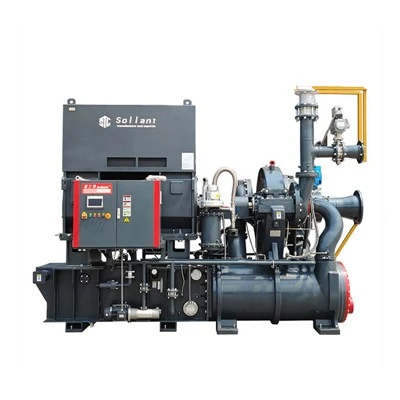
Let’s break this down like I’m explaining it to a buddy who just bought his first shop compressor – but with the science that actually matters, because we’re talking high pressure here, not the little 1HP units for inflating tires. First, quick refresher: high pressure piston compressors squeeze air (or gas) into tiny volumes, and when you compress something, it heats up – physics 101, but cranked to 11. That heat has to go somewhere, otherwise metal parts expand too much, seal rings wear out fast, and efficiency drops faster than a lead balloon.
First up, the most common one we see (and use on 70% of our standard units) is air cooling. Yup, plain old ambient air. Here’s how it works: every cylinder has a bunch of fins wrapped around it – like a mini radiator, but on the compressor’s barrels. When the crankshaft spins, it hooks up to a small fan (integrated, not a separate unit hanging off the wall) that blows air straight across those fins. The fins increase surface area so more heat can jump from the hot cylinder metal to the passing air.
Wait, but why air? It’s cheap, easy to maintain, no extra plumbing or coolant to deal with. No leaks, no flushing lines every few years. Perfect for applications like small to medium manufacturing, pneumatic tool operations, or even small-scale bottling where you don’t need super extreme pressure. But hold on – air cooling has limits. If you’re running 100+ bar units in a hot, stuffy workshop (say, 95°F+ ambient), air cooling might not cut it. We actually tell our customers who run 150+ bar high pressure piston compressors in tropical climates to skip straight to water cooling.
Second method, water cooling – the heavy hitter for high pressure. This is where we circulate cool water (sometimes treated, sometimes just tap, depending on the setup) through jackets that wrap around the cylinder head, liner, and even the intercoolers between stages. Because water has way higher heat capacity than air – it can absorb way more heat without getting too hot. That means it’s way more efficient for dealing with the massive heat spikes from compressing gas to 200+ bar.
Wait, what are intercoolers? Oh right, most high pressure piston compressors are multi-stage – they squeeze air in steps, like first to 10 bar, then 30, then 100, etc. Each stage gets hot, so between stages, we stick an intercooler (usually air or water cooled too) to cool the air back down before the next compression step. Water-cooled intercoolers are top tier for high pressure because they bring the air temp almost back to ambient, so the next stage doesn’t have to work as hard, saving energy and keeping temps in check.
But water cooling has a catch: you need a reliable water supply. If your water line gets shut off, your compressor will overheat in minutes. We always add temperature sensors to our water-cooled units that trigger an automatic shutdown if flow drops, to prevent damage. Also, if you’re in a place with hard water, you have to treat it – otherwise mineral buildup clogs the jackets and reduces cooling over time. Nothing worse than a clogged water jacket leading to a seized cylinder mid-production run.
Now, there’s a hybrid method we’ve been using more lately, especially for custom units – air-water cooling. Wait, why mess with both? Let’s say a customer needs something that works in both cool and hot environments, and doesn’t want to deal with constant water treatment. We’ll do a primary air cooling system for the main cylinders, and a small water loop just for the hottest parts: the cylinder head and intercoolers. That way, when ambient temp is mild, the air cooling alone is enough, saving water and energy. When it’s hot, the water kicks in to pick up the slack. We used this setup on a custom 250 bar compressor for a beverage bottler in Arizona last year, and they haven’t had a single overheat issue in 18 months. Win-win.
Wait, what about oil cooling? I know a lot of people mix this up with air or water cooling. Let’s clarify: oil is mostly a lubricant, but it also helps with cooling. In piston compressors, the oil circulates through the crankcase and around the cylinders, absorbing heat, then it goes through its own small air or oil cooler to shed that heat before looping back. So it’s a secondary cooling method, not a primary one. You can’t rely on oil alone for high pressure – it doesn’t dissipate heat fast enough – but it’s a nice backup. For example, if a water line has a tiny leak, the oil will pick up extra heat and keep things running long enough to fix it, no emergency shutdown.
Now, let’s talk about when to use which, because that’s the part that actually matters for your operation. If you’re looking for a compact, 30-100 bar high pressure piston compressor for a workshop, paint shop, or small lab – air cooling is perfect. It’s low maintenance, no plumbing, easy to move around. We have a line of these that go from 5HP to 50HP, and they’ve got finned cylinders and a 12V integrated fan that kicks on automatically when the cylinder hits a set temp. Way better than the old units that run nonstop, wasting energy.
If you’re going above 100 bar, or running 24/7, or in a hot climate (like places where ambient temp is over 90°F year-round), go water cooling. Last quarter, we shipped 12 water-cooled 180 bar units to a nitrogen gas producer in Texas, and their maintenance team told us they cut compressor downtime by 40% compared to their old air-cooled units. That’s the kind of number that makes business owners sit up and take notice.
Hybrid is for middle ground: if you need flexibility, maybe you’re a fabrication shop that uses the compressor for different jobs, some light, some heavy. We actually let our customers toggle the water cooling on and off on our hybrid units, so you can save water on slow days and use it only when you’re running 8+ hours straight.
Now, let’s bust a common myth: people think “bigger cooling = better.” Nope. If you overcool, you waste energy. Compression is most efficient when the air is slightly heated, right? Wait, no – wait, actually, after compression, you want to cool it down, but if you cool it too much between stages, the next stage has to do more work. That’s why intercooler temp is calibrated – we set our intercoolers to get the air down to like 10-15°F above ambient, not ice cold. That balance is key for both cooling and efficiency.
Another thing we tweak: fin design on air-cooled units. Not all fins are the same. On our high pressure units, we use curved fins instead of straight ones, because they create more turbulence in the air flow, so the air picks up more heat instead of just flowing smoothly around the fins. Straight fins might be cheaper, but they’re 15-20% less efficient, which over a year adds up in energy costs. We pass that savings on to our customers by not making them buy more compressor than they need.
Wait, what about gas cooling for specific applications? Like if you’re compressing a specialty gas (helium, argon) instead of air, do you use different cooling methods? A little, but the same core systems apply. We usually go with water cooling for specialty gases because they’re often used in labs or medical facilities where purity is key, and air cooling can introduce tiny particles that contaminate the gas. Water cooling is sealed, so less chance of that. That’s a big one – we had a customer doing helium compression for medical use a couple years back, and they switched from air to water cooling because of contamination issues, and their product quality went right back up to spec.
Now, let’s talk about common mistakes customers make when choosing cooling. First, buying an air-cooled unit for a 200 bar application in Florida. We see this all the time – someone sees a cheap air-cooled compressor online, thinks it’s the same as ours, then calls us saying it’s overheating in 10 minutes. The cheap ones have tiny fins and weak fans, made for low pressure. Our air-cooled high pressure piston compressors are built with heavy-duty fins and industrial fans, so they can handle the heat, but even ours will struggle in extreme conditions.
Second mistake: ignoring maintenance on cooling systems. For air-cooled units, you have to clean the fins every 6 months – dust and gunk build up, block air flow, make cooling worse. We include a free fin cleaning brush with every unit we sell, and our service team does a check-up every year. For water-cooled units, you have to flush the water jackets once a year, especially in hard water areas. Skip that, and you get mineral buildup that acts like an insulator, so the cooling stops working even if the water is flowing. If you take care of the cooling system, your compressor will last 15+ years, instead of 5.
Here’s the thing: as a supplier of high pressure piston compressors, we don’t just sell a unit and walk away. We know cooling is make-or-break, so we size the cooling system to match your exact needs, not a generic spec. If you’re not sure which method is right for you, we ask a few simple questions: what pressure do you need, how many hours a day do you run it, what’s your ambient temp, what gas are you compressing, do you have a reliable water supply? That’s how we hook you up with the right cooling setup, not just the most expensive one.
I’ve been doing this long enough to see a hundred different cooling issues, and every time, it comes down to either choosing the wrong method for the job or skipping maintenance. That’s why we’re so transparent about it – we don’t want our customers calling us at 2AM when their compressor dies mid-production, because that’s bad for them and bad for us.

If you’re in the market for a high pressure piston compressor, or you’re dealing with overheating issues on your current one, hit us up to chat. We’ll walk you through the cooling options, no jargon, no pressure, just straight up info based on what your operation actually needs. No generic solutions, no upselling stuff you don’t need – that’s how we roll.
High Pressure Piston Compressors At the end of the day, cooling isn’t just a part of the compressor – it’s the backbone. Get it right, and your compressor will run like a dream for years. Mess it up, and you’ll be putting out fires (literally, in some cases) nonstop. That’s why we prioritize cooling design as much as we do the compression itself. Alright, that’s my rant for today – go check your compressor’s cooling system if you haven’t lately, and if you need help, you know where to find us. References: 1. Compressed Air Gas Institute. (2022). Cooling Systems for Positive Displacement Compressors. 2. Technical Association of the Pump Industry. (2021). Heat Transfer in High Pressure Piston Compressor Cylinders. 3. International Organization for Standardization. (2020). ISO 1217: Compressors – Acceptance tests.
Shanghai Sollant Energy Saving Technology Co., Ltd.
As one of the most professional high pressure piston compressors manufacturers and suppliers in China, we’re featured by quality products and good service. Please rest assured to buy bulk durable high pressure piston compressors from our factory. Welcome to view our website for more information.
Address: No.215, Songri Center, Beihongqiao, Jiading District, Shanghai, China.
E-mail: info3@sollant.com
WebSite: https://www.sollant-gas.com/
