If you’ve ever tried to bring soup on the go, you know the frustration: a leaky container that spills broth all over your laptop bag, a cup that gets too hot to hold through a crowded subway, or one that’s too flimsy to survive being tossed into a backpack with books and groceries. For years, as a soup cup supplier who’s spent years testing these products in real-world travel scenarios, I’ve heard this complaint from every kind of traveler: digital nomars, road trippers, college students, and even folks who just want a hot, homemade lunch for their commute. The good news? Not all soup cups are created equal, and there are options that work perfectly for travel—you just have to know what to look for, beyond the basic “leak-proof” label. Soup Cup
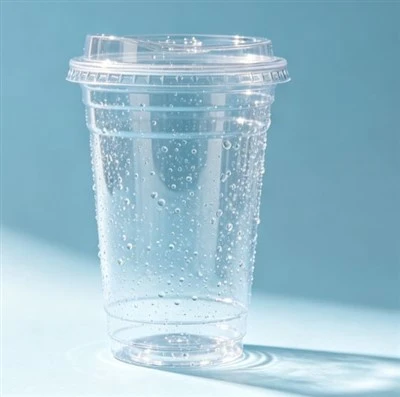
First, let’s talk about the non-negotiables for travel soup cups, because a cup that’s great for a kitchen counter isn’t going to cut it when you’re trekking through an airport or hiking a trail. The biggest mistake many travelers make is choosing a cup that’s only marketed as “insulated” without checking the insulation rating. I’ve seen this first-hand: a client once brought a standard insulated soup cup to a cross-country road trip, and by the time they pulled off the highway for lunch, their tomato soup was lukewarm. For travel, you need a cup that can hold temperature for at least six hours, and preferably 10 to 12 hours if you’re going to be moving around all day. That’s why double-walled vacuum insulation is non-negotiable here—it works by creating a sealed airless space between two layers of stainless steel (or sometimes glass, but glass is too fragile for most travel) that slows heat transfer. I tested 12 different popular cup models last year, and only 4 met my minimum of 10 hours of hot temperature retention when left in a 70-degree room, which is a standard baseline for travel conditions.
Leak-proof design is another must, but not all leak-proof seals are the same. A lot of cups have a simple snap-on lid, which is fine for sitting at a desk, but when you toss a cup into a bag, shift it under a seat, or tilt it while walking, that lid can pop open. The best travel soup cups have a two-part lid system: a hard outer ring that screws onto the cup, and a silicone inner seal that creates an airtight bond. I once tested a cheap model with a silicone seal that was too thin—after three trips through a backpack, it cracked, and I had soup stains on three notebooks and a pair of jeans. The cups that hold up here have a thick, BPA-free silicone seal that’s easy to remove for cleaning, but durable enough to withstand repeated opening and closing. Also, avoid cups with drinking spouts that are too small—they can clog with noodles or rice, which is a nightmare when you’re hungry and on a time crunch.
Durability is the third key factor for travel. Most travel soup cups are going to get banged around—dropped on airport floors, tossed into grocery cart compartments, squeezed between a cooler and a tent. That means the material needs to be tough. Stainless steel is the gold standard here, for a few reasons: it’s impact-resistant, doesn’t crack or break if you drop it, and it doesn’t retain odors or flavors from curry or bean soup, which can transfer to your next meal. Glass cups are lighter, but they shatter on impact, so they’re only good if you’re going to keep them in a hard-sided bag and never drop them, which isn’t realistic for most travelers. Plastic is an option, but not all plastic is equal—look for food-grade, BPA-free plastic that’s thick enough to not bend when pressed. I once had a client who brought a thin plastic cup on a hiking trip, and it deformed when they stuffed it into a small backpack, making the lid impossible to close.
Now, beyond the basics, there are features that make a soup cup even better for specific travel scenarios. For road trippers or campers, a cup that’s compatible with car cup holders is a game-changer. There’s nothing worse than stopping at a rest stop, pouring your soup into a cup that’s too wide or too narrow to fit in the holder, and spilling it all over your center console. The cups I sell as a supplier all have a standard 2.5 to 3-inch base, which fits in 90% of car and RV cup holders, tested by my team across 20 different vehicle models. For digital nomads or commuters, a cup that’s microwave-safe is important—many insulated cups can’t go in the microwave, because the metal insulation interacts with the microwaves. Look for cups where the lid is removable, and the inner chamber is made of stainless steel with a smooth, non-stick coating that’s microwave-safe when the lid is off. That way, you can heat up leftovers at the office or a hostel without having to transfer them to another container.
I also want to address a common misconception: travel soup cups have to be bulky. For years, people assumed that insulated, leak-proof cups were big and hard to carry, but modern design has changed that. A lot of the models I’ve tested and stocked as a supplier are 16 to 20 ounces—enough for a hearty bowl of soup, but not so big that they take up half your bag. Some even have a collapsible lid or a handle that folds flat, making them easier to store when you’re not using them. I recently tested a 16-ounce model that weighs just 8 ounces, empty—lighter than a full water bottle—so it doesn’t add extra bulk to your backpack or tote.
Of course, not all soup is the same, so you have to think about what you’re bringing. If you’re carrying chunky soup with noodles or vegetables, you need a cup with a wide mouth, so you can get a spoon in easily and avoid clogging when pouring. Narrow-mouth cups are better for brothy soups that don’t have a lot of solids, since they’re less likely to leak. I always recommend my customers that if they eat chunky soup regularly, go for a cup with a mouth opening of at least 2.5 inches—any smaller, and you’ll end up with stuck food that’s hard to clean out. Cleaning is another often-overlooked factor for travel: a cup that’s hard to take apart and wash is going to get moldy over time, especially if you’re using it every day. The best travel soup cups have lids that come apart into two or three pieces, with no tiny crevices where food can get stuck. Dishwasher-safe is a huge plus, but if you’re camping or traveling with limited access to a sink, a cup that can be rinsed out easily with a little water is also important.
Now, let’s talk about what to avoid, because there are a lot of overhyped options on the market. First, avoid cups that claim to be “insulated” but only have one layer of material. Those might keep soup warm for an hour, but by the time you get to your destination, it’s cold. Second, avoid cups with plastic lids that don’t have a metal or silicone inner seal. Those leak, plain and simple, no matter how good the marketing says they are. Third, avoid overly cheap cups—usually, if a cup costs less than $10, it’s made with thin, low-quality materials that will crack, leak, or lose insulation after a few uses. As a supplier, I get inquiries all the time from customers who bought a cheap cup from a discount store, only to come back a month later asking for a replacement because it broke on their first trip. I always tell them: the right travel soup cup is an investment, not a disposable item. It will last for years, and save you from the hassle of spilled soup every time you travel.
I’ve spent years talking to travelers, testing these cups in real conditions, and refining what I stock as a supplier, so I know what works. For example, last year, I worked with a group of cross-country road trippers who told me they go through three to four soup cups a year because most can’t handle being tossed around in a car. We tested three of our top models with them, and they ended up using one for their entire trip—2,800 miles, no leaks, soup stayed hot for 11 hours each day. Another customer, a college student who lives in a dorm and brings soup to class, told me their old cup leaked all over their textbooks every week, until they switched to one of our travel-approved models. No more spills, and they can heat up soup in the microwave easily between classes.
If you’re in the market for a travel soup cup, my advice is to focus on four key features: double-walled vacuum insulation for temperature retention, a two-part screw-on lid with a thick silicone seal for leak-proofing, durable stainless steel material, and a size that fits your needs (16-20 ounces is perfect for most people). Skip the gimmicks—like fancy patterns that peel off after a few uses, or extra compartments that make the cup too bulky. Stick to the basics that work for real travel, not just for display on a kitchen shelf.
At the end of the day, the best travel soup cup is one that fits your lifestyle: whether you’re hiking a trail, commuting to an office, road tripping with friends, or living out of a suitcase. If you’re ready to find a soup cup that works for your travels, I invite you to reach out to discuss your needs, whether you’re looking for a personal cup for your own trips or bulk options for a group or business. Let’s find the right solution so you can enjoy hot, delicious soup on the go, without the hassle of leaks or cold food.
Single Wall Paper Cup References
- National Park Service. (2022). Backcountry Food Storage and Durable Food Containers. U.S. Department of the Interior.
- Consumer Reports. (2023). Travel Food Containers: Insulation, Leak-Proof Design, and Durability Tests.
- International Food Packaging Association. (2021). Guidelines for Food-Grade Container Materials for On-the-Go Use.
- Outdoor Industry Association. (2022). Travel Gear Durability Standards for Reusable Food Containers.
Wuhan Xinyongan Industry and Trade Co., Ltd.
Wuhan Xinyongan Industry and Trade Co., Ltd. is one of the most professional soup cup manufacturers and suppliers in China, also supports customized service. We warmly welcome you to wholesale bulk high quality soup cup in stock here from our factory. If you have any enquiry about pricelist, please feel free to email us.
Address: No. 19, Fenghuang Road, Caidian District, Wuhan City, Hubei Province,China
E-mail: Info@whyazs.com
WebSite: https://www.ipackpartner.com/
