If you’re here, you’re probably stuck trying to pick the right flange butterfly valve for your job—and let’s be real, guessing the pressure rating of your valve is one of the easiest ways to end up with something that either breaks mid-process or works so overkill you’re wasting thousands of dollars. As a flange butterfly valve supplier that’s been grinding in this space for 12 years, I’ve seen way too many folks skip this step and regret it: a food processing plant that had a valve blowout mid-milk transfer, a mining operation that’s still waiting on a replacement because they bought a valve rated for half the pressure they needed for slurry lines, a HVAC company that overspent by 40% on a valve that could handle way more than their 150 PSI system. This guide is all about how to get that pressure rating right, no fancy engineering degree required, just practical stuff we use every day in our shop. Flange Butterfly Valve

First off, let’s kill the confusion right now: a flange butterfly valve’s pressure rating isn’t just some random number on a tag. It’s the maximum amount of pressure the valve can handle without failing, but that number changes depending on two big factors the manufacturers don’t always spell out: the temperature of what you’re moving, and what that “maximum pressure” actually means for your line. Most valves come rated like Class 150, Class 300, Class 600—but that Class number isn’t a fixed PSI. At room temp, Class 150 is roughly 150 PSI, but crank the temp up to 300°F, and that drops to like 100 PSI. Crank it to 500°F? Now you’re down to 50 PSI. That’s a huge difference I see all the people mess up. They see Class 150 and think “good for 150 PSI forever,” but if your medium is hot water or steam, you’re way overestimating how much that valve can take.
So step one: grab your system’s actual working pressure, not the test pressure. A lot of specs say “test pressure” is 2x working pressure, but that’s just to make sure the valve doesn’t leak during factory checks. Your working pressure is the amount the valve will see when it’s actually open and operating—no static test, just real use. For most regular applications, that’s easy: if your pipe’s max pressure gauge says 120 PSI, your working pressure is 110, tops. But if you’re on a boiler line, a slurry line, or a chemical plant, you have to add in pressure spikes. Pumps kick on and off, valves slam shut, those spikes can double your working pressure for half a second. If you pick a valve that’s exactly rated for your static pressure, that spike is gonna break it. I usually tell people to add 20-30% to their working pressure to cover spikes—better safe than having to replace a valve that didn’t make it a month.
Then there’s temperature. This is non-negotiable, no exceptions. If you’re moving cold water, room temp, that’s straightforward, but if it’s hot oil, steam, or cold ammonia, you need to check the valve’s temperature-pressure chart. Every reputable valve maker (and let’s be clear, I only deal with reputable ones) has a chart that shows how pressure drops as temp rises. For example, our 3-inch Class 150 wafer valve: at 70°F, it’s rated for 150 PSI, at 300°F it’s 110 PSI, at 450°F it’s only 60 PSI. If you’re running steam at 120 PSI and 350°F, a Class 150 valve is way too weak—you need Class 300, because at 350°F Class 300 gives you roughly 190 PSI, which is above your 120 PSI plus 20% buffer. I had a guy last year who tried to use a Class 150 valve for his steam line, claimed “the gauge only says 100 PSI, so it should work,” and 2 weeks later the valve’s disc bent so bad it blocked the line, costing him $8k in downtime. Don’t be that guy.
Next: media type. What are you flowing through that valve? Water is easy, oil is trickier, slurry is even more so, corrosive chemicals are another level. Slurry has solids that hit the valve’s disc and seat, so they create extra pressure when the valve opens or closes. If you’re moving coal slurry or sand slurry, that pressure from the impact means you need a valve rated 10-15% higher than your working pressure. Corrosive stuff? The material of the valve matters here too, but it also affects pressure rating. A brass valve can handle 150 PSI at room temp, but a stainless steel 316 valve of the same size is rated for more? No, wait—same size, same Class, different material, the pressure rating might change slightly because corrosion weakens the metal over time. If you’re dealing with sulfuric acid or something, you don’t just need the right material, you need a pressure rating that accounts for wear and corrosion. I always ask customers what their media is first, that’s the first question out of my mouth when they reach out, because that changes everything.
Wait, also flange standards. A lot of people mix up flange ratings with valve ratings. Like, a Class 150 flange is gonna fit a Class 150 valve, but if your piping is Class 300, you can’t put a Class 150 valve on there. Even if you calculate the pressure right, if the pipe flange is rated higher, the valve has to match it, because the flange is the weak point. I’ve seen people buy a valve rated for 200 PSI but put it on a Class 150 flange, and that flange will break before the valve does. That’s a dumb mistake, but it happens all the time. So check your pipe flanges’ pressure rating first—valve has to match that, or be higher. If your flange is Class 150, don’t get a Class 300 valve just because it’s cheaper, that’s overkill, but don’t get lower either.
Let me throw in a quick example to make this concrete. Say you’re a small brewery, you need a valve for your hot wort line. Your working pressure is 90 PSI, your wort is at 212°F. Your flange is Class 150. Now, the Class 150 temp-pressure chart: at 212°F, that’s almost 70°F, so pressure is still ~150 PSI. Add 20% for spikes: 90 + 18 = 108. 150 is higher than that, so Class 150 works. But if your wort is at 300°F (some breweries do boil higher for certain beers), Class 150 drops to 110 PSI, so 108 is still under that, so still Class 150. But if you were running at 110 PSI working pressure, add 20% is 132, which is over the 110 PSI for Class 150 at 300°F, so you’d need Class 300, which at 300°F is ~225 PSI, enough for your 132. That’s exactly the kind of call we help people make every day.
Another example: mining, moving sand slurry. Your working pressure is 100 PSI, flange Class 150. But slurry impact means add 15%: 115. Also, slurry can erode the valve over time, so you don’t want to be right at the limit. So even though Class 150 at 70°F is 150, that’s enough, but wait—if your temp is 180°F, Class 150 is 135 PSI, which is above 115, so still okay. But if you were moving very dense slurry, maybe add 20% instead of 15%, so 120, still under 135, so Class 150. Simple, but easy to skip that slurry impact part.
Now, common mistakes I see all the time. First: relying on static pressure, not working pressure. That’s the big one. Static pressure is when the line is full and not moving, that’s way lower than when the pump is running and there are spikes. Second: ignoring temperature, like I said earlier. That’s the second most common. Third: matching valve to pipe pressure, not flange pressure. Fourth: using a general valve for a specific media. I had a guy try to use a standard rubber-seated valve for ammonia, and the rubber swelled up and the valve lost pressure in a week. He ended up needing a metal-seated valve, which is rated higher for corrosive stuff, cost him more but didn’t break.
What do we do at our shop when a customer calls? We start with 4 questions: 1) What’s your working pressure (max, not static)? 2) What’s the operating temperature of your media? 3) What are you moving (water, oil, slurry, chemical, etc.)? 4) What’s your pipe flange rating? Then we pull up the valve’s spec sheet, cross reference, and give them exactly the right rating, no guesswork, no upselling something they don’t need, no underselling that’s gonna break. We do 90% of our business repeat because we don’t mess this up.
Wait, also keep in mind that different valve types have different pressure ratings. Wait no, this is flange butterfly specifically, right? But even among flange butterfly valves, wafer vs lug vs flanged? Wait no, the rating here is about the flanged connection, so make sure you’re looking at flanged-end valve ratings, not wafer or lug. Wafer valves don’t have the flanges, so their rating is lower, because they’re held between two flanges. Flanged end valves have their own flanges, so they match the flange rating, which is what we’re talking about. That’s another mix-up: if you’re buying a wafer valve, the pressure rating is lower, but you asked for flange, so you’re good, just make sure you’re looking at flanged end specs.
Oh, and don’t forget about code requirements. If you’re in a regulated industry—pharmaceutical, food and beverage, oil and gas—they have specific codes, like ASME B16.34 for valve ratings. You can’t just pick a random number, you have to follow that code. That’s why we only stock valves that meet ASME standards, because if a customer needs it for FDA or OSHA, we don’t have to hunt for parts that don’t cut it. I had a food plant inspector shut a line down once because the valve they had didn’t meet ASME ratings, so now we always mention that to food and pharma customers, just to make sure they don’t run into that.
So to wrap this up, the 5 easy steps to get your pressure rating right: 1) Get your system’s actual working pressure, add 20-30% for pressure spikes. 2) Find the operating temperature of your media, pull the temp-pressure chart for your valve. 3) Account for your media: add 10-20% for slurry/corrosive stuff, pick the right material (stainless vs bronze vs whatever) that works with your media. 4) Match the valve’s rating to your pipe flange’s rating, no exceptions. 5) Check any industry codes you have to follow. That’s it, no engineering degree, just common sense stuff.
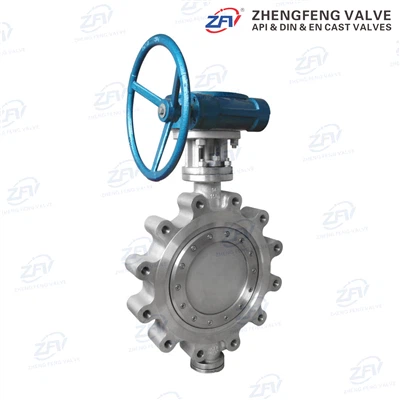
If you’re still not sure, don’t mess this up with trial and error. Reach out, we’re here to walk through your specific application, no hard sell, no confusing jargon, just straight answers. We’ve worked with small breweries, big mining ops, HVAC contractors, food plants, all kinds of folks, so we’ve seen every scenario. Don’t end up like that steam line guy, spend 2 minutes with us, and you’ll get the right flange butterfly valve pressure rating on the first try.
Double Offset Butterfly Valve References
- ASME B16.34, Valves – Flanged, Threaded, and Welding-End
- API 609, Butterfly Valves – Flanged, Lug, Wafer, and Butt-Welding End
- Manufacturers’ Temperature-Pressure Ratings for Flanged Butterfly Valves (Generic Valve Association Technical Bulletin)
- Industrial Valve Application Guidelines, Fluid Controls Institute (FCI)
Zhejiang Zhengfeng Valve Co., Ltd.
We’re well-known as one of the leading flange butterfly valve manufacturers and suppliers in China. With abundant experience, we warmly welcome you to buy bulk advanced flange butterfly valve from our factory. If you have any enquiry about cooperation, please feel free to email us.
Address: Hengtong Road, Wuxing Industrial Park, Wenzhou, Zhejiang, China. 325105
E-mail: sales@zfvalve.com
WebSite: https://www.zfvcns.com/
