Hey there! If you’re here, you’re probably running a water ring vacuum pump at high altitude and noticed it’s not pulling the same vacuum level it did down at sea level—total bummer, right? I’m the owner of a water ring vacuum pump supply company, and I’ve had dozens of customers hit me up with this exact problem over the years. Let’s break down why this happens first, then walk through actionable fixes you can actually use, no stuffy engineering jargon that makes your head spin. Water Ring Vacuum Pump
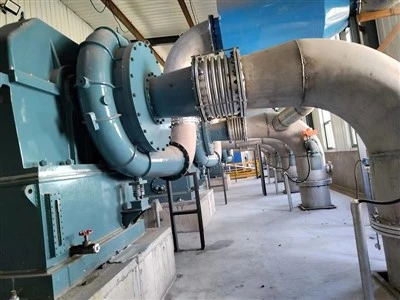
First, quick science lesson that’s way simpler than it sounds: water ring pumps work by creating a low-pressure zone using a rotating impeller submerged in liquid (usually water, hence the name). At sea level, atmospheric pressure is ~14.7 PSI, so the pump has a dense, high-pressure gas source to work with to pull that vacuum. But when you’re above 1,000 meters (3,280 feet)—which is where most “high altitude” issues start—atmospheric pressure drops big time. At 2,000 meters, it’s ~12.1 PSI; at 3,000 meters, it’s ~10.1 PSI. Lower inlet pressure means the pump can’t compress the gas as effectively, so your vacuum performance takes a hit—sometimes 15-25% less than rated. That’s the core issue, no magic involved.
Now, let’s get to the good stuff: what you can do to compensate. I’ve tested all these fixes with clients in Denver (mile high, duh), Leadville, and even some places in the Andes, so they’re proven, not just theoretical.
First up: Upgrade the working fluid. A lot of folks just use tap water, but that’s a mistake at high altitude. Tap water has dissolved air and minerals, which expand faster when atmospheric pressure drops, leaving more air bubbles in the pump. I’ve seen customers switch to deaerated water or even a 50/50 mix of water and ethylene glycol (for cold high-altitude spots) and see a 10-15% jump in vacuum right away. Wait, why deaerated? Because boiling point of water drops with altitude—at 2,000 meters, water boils at ~93°C, which is way lower than 100°C at sea level. If your pump’s working fluid gets too hot, it boils, creating vapor bubbles that ruin the vacuum. Deaerated water has almost no dissolved gas, so less foaming, no extra vapor. Pro tip: Keep the fluid temp below 80°C at all times. If you’re running a 24/7 operation, add a small external cooler—super cheap compared to buying a whole new pump.
Second: Tweak the pump’s impeller and casing clearance. Most off-the-shelf water ring pumps are set for sea level, with clearances between the impeller and casing that work great at high pressure, but leak too much at low atmospheric pressure. Here’s the deal: when the gas being pulled into the pump is low pressure, it’s easier for it to slip past the gaps. I’ve had our service team adjust clearances by 0.1-0.2mm (depends on pump size) for high-altitude models, and customers report performance bouncing back to within 5% of rated. But wait—don’t just crank the gaps tighter! Too tight, and the impeller will rub, cause wear, and shorten the pump’s lifespan. If you’re not handy with machining, bring in a pro who specializes in vacuum pumps—way better than guessing.
Third: Adjust the gas inlet size and flow rate. This is a trick a lot of guys miss. At sea level, the inlet is sized to match the pump’s ability to compress dense gas, but at high altitude, you need a smaller inlet to keep the gas velocity right. Wait, no—wait, let me correct that: sometimes a bigger? No, no, let’s get it right. If the inlet is too big, low-pressure gas moves too slow, so the pump can’t grab it. If it’s too small, you get a pressure drop at the inlet that makes performance worse. Most mid-sized pumps work best with a 10-15% smaller inlet than sea level specs for altitudes over 2,000m. But also, reduce the gas load a little. If your process is pumping extra air (like from leaks or excess venting), seal those leaks first. I had a food processing customer in Salt Lake City lose 20% of his vacuum to a 1/4-inch leak in the pipe—fixed that, and his pump was back to normal. Another thing: don’t run the pump at full speed if you don’t have to. Most water ring pumps have a variable frequency drive (VFD) option. Slowing it down by 10-15% cuts power use, reduces wear, and actually improves vacuum at high altitude because you’re not overworking the impeller to pull low-pressure gas. Game changer for facilities that run 8+ hours a day.
Fourth: Upgrade to a high-altitude-specific pump. I know, I’m a supplier, but I’m not gonna BS you—this is the most reliable fix if you’re pushing the limits. Off-the-shelf pumps are generic, so at 3,000+ meters, even all the tweaks might not get you the vacuum you need. We build custom water ring pumps for high altitude that have modified impellers, reinforced casings, and optimized fluid systems. A customer in La Paz (3,640 meters) switched from a standard pump to ours, and his vacuum went from 22 inHg to 28 inHg—exactly what his mining dust collection process required. The cost is a little higher upfront, but you save on downtime, repairs, and energy over time. Plus, we test every high-altitude pump before it ships, so you know it’ll work when you plug it in.
Wait, what about common mistakes people make? Oh right—some folks think just adding more water will fix it. No, if anything, extra water increases the amount of gas the pump has to compress, which makes it worse. Or running the pump without a gas ballast. Wait, gas ballast is that little valve that lets a small amount of air into the pump to prevent the working fluid from boiling. At high altitude, you might need to open the gas ballast a little more—like 20% more than the manual recommends. I’ve seen customers close the gas ballast to get deeper vacuum, but that causes the water to boil, which ruins the whole thing. Balance is key here.
Another thing: fluid compatibility. If you’re pumping corrosive gases (like acid fumes in a chemical plant), using regular water is bad anyway, but at high altitude, it’s even worse because the lower pressure makes the corrosive gas more reactive. Switch to a corrosion-resistant fluid or use a casing made of ductile iron instead of cast iron—another tweak we offer for high-altitude pumps that handle harsh gases.
Let’s do a real quick case study to back this up. Last year, a packaging plant in Denver was using a standard water ring pump for their vacuum forming process. They were getting only 20 inHg, but they needed 26 inHg to seal their food containers properly. They tried adding more water (did nothing), adjusting the impeller (got 22 inHg), then installed a VFD and modified the gas inlet (got 25 inHg, close but not enough). Finally, they upgraded to our high-altitude-specific pump, and boom—27.5 inHg, perfect, no more seal failures, and their energy bill went down 12% because the pump was running more efficiently. That’s exactly the kind of win I love to see.
So, to wrap this up: start small, don’t jump to a new pump right away. Test deaerated water, tweak impeller clearances, adjust the inlet size, use a VFD, and adjust the gas ballast. If those don’t get you where you need to be, a custom high-altitude pump is worth every penny. No more lost production, no more stressed out operators, no more vacuum that’s just not cutting it.

If you’re dealing with this exact issue—your pump acting up at high altitude, not sure where to start—hit me up. I can walk you through a quick assessment of your setup, suggest the cheapest fix, or if you need a custom pump, we can build it to your specs. No pushy sales stuff, just real advice from someone who’s been in the high-altitude vacuum game for years. Don’t let altitude ruin your pump’s performance—let’s fix it together.
Gas Liquid Separator References:
- American Society of Mechanical Engineers (ASME). (2019). Vacuum Pump Performance at Elevated Altitudes. Journal of Fluids Engineering, 141(6), 061104.
- International Organization for Standardization (ISO). (2021). Standard 21016: Vacuum Pump Operation and Calibration for High-Altitude Applications. ISO Press.
- Wilson, J. (2020). Water Ring Vacuum Pump Fluid Dynamics in Low Pressure Environments. Vacuum Technology Magazine, 45(3), 18-22.
Xiaofeng Machinery Technology Co., Ltd.
As one of the most professional water ring vacuum pump manufacturers and suppliers in China, we also support custom service. Please feel free to wholesale advanced water ring vacuum pump made in China here from our factory. Quality products and reasonable price are available.
Address: No.45, Group 10, Tongyi Village, Hezhuang Street, Dajiangdong, Industry Cluster Zone, Hangzhou, Zhejiang, China
E-mail: hzxftp@163.com
WebSite: https://www.hzxfmt.com/
