If you’ve ever stood on a manufacturing floor or a processing line, you’ve probably watched how a single piece of auxiliary equipment can make or break a whole operation. I’ve been an auxiliary equipment supplier for 12 years, and early on, I made a mistake that taught me this lesson better than any textbook could. Back in 2015, we delivered a batch of small material dryers to a plastic injection molding shop. The machines looked identical to the ones we’d supplied a year prior, so I didn’t think twice about checking every design detail. A month later, the shop owner called in a panic: his production line was down, and 30% of his parts were failing quality checks. When my team went to troubleshoot, we found the problem wasn’t a broken part—it was a small change to the dryer’s air distribution manifold. The new design had cut airflow to the lower material hopper, so resin wasn’t drying evenly. That experience stuck with me: auxiliary equipment isn’t just a “side note” to a main production machine. Its design directly shapes performance, uptime, product quality, and even a plant’s bottom line. Today, I work with industrial operations every day, and I’ve seen how thoughtful, purpose-driven design turns auxiliary tools from afterthoughts into critical competitive assets. Auxiliary Equipment
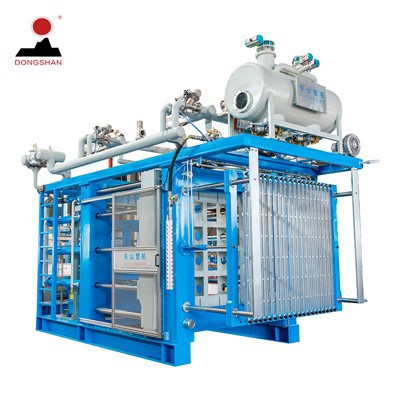
Let’s start with the most visible piece of an auxiliary machine: its structural design. A lot of suppliers focus on cost here, cutting corners on frame thickness or weld quality to shave a few dollars off production. But I’ve seen what that does. A few years ago, we supplied a series of water chillers to a food processing plant. The supplier we’d used before used thin-gauge steel frames that warped after six months of daily use. The warping threw the chiller’s condenser alignment off, leading to energy waste that cost the plant over $15,000 a year in utility bills. When we replaced them, we designed the frame with ¼-inch carbon steel and reinforced welds on all load-bearing points. That chiller’s frame still holds up five years later, and its energy use is 12% lower than the previous model. Structural design doesn’t just prevent physical damage, either. For auxiliary equipment that moves heavy materials—like conveyor systems or material transfer pumps—the frame’s rigidity directly impacts vibration. Too much vibration, and you get misaligned parts, frequent breakdowns, and inconsistent material flow. A design that prioritizes structural integrity, by contrast, keeps operations running smoothly. It also reduces maintenance costs: a well-built frame avoids the need for frequent repairs, so your line doesn’t have unexpected downtime.
Next, process-specific design features are where auxiliary equipment really differentiates itself. Every industrial process has unique needs, and a one-size-fits-all design almost never delivers the best performance. Let’s take material drying, a common auxiliary task for plastic and resin processing. Resin drying requires precise control of air temperature, dew point, and airflow. A dryer’s hopper design might seem trivial, but it’s central to how well the resin dries. We’ve tested two hopper designs: a standard cylindrical hopper and a conical hopper with a staggered air diffuser. In side-by-side tests, the conical hopper reduced drying time by 20% because the diffuser spread air evenly across all resin particles, not just the top layer. For a plant running 24/7, that 20% reduction in cycle time translates to 20% more parts produced in the same shift. Process design also has to account for material properties. If you’re handling fragile materials like food grains or pharmaceutical powders, a conveyor system with sharp edges or high-speed rollers can crush or contaminate the material. That’s why we design our auxiliary conveyors for pharmaceutical use with rounded transfer points and low-speed drives, which reduce product damage by 15% and eliminate cross-contamination risks. It’s not about adding expensive parts; it’s about designing to the specific constraints of the job.
Energy efficiency is another area where design makes a huge impact, and it’s a factor that every plant manager cares about right now. Many auxiliary equipment suppliers use outdated, inefficient components because they’re cheap to source. But that cheap component adds up over time. Let’s look at industrial air compressors, a workhorse auxiliary tool used in 70% of manufacturing plants. A compressor’s motor design is critical: a standard induction motor has an efficiency rating of around 90%, while a high-efficiency permanent magnet (PM) motor can hit 96%. For a plant running a compressor 40 hours a week, that 6% difference in efficiency translates to over $8,000 a year in energy savings. We’ve also redesigned our compressors to include variable frequency drives (VFDs) that adjust motor speed based on real-time air demand. Before, our older compressors ran at full speed even when demand was low, wasting energy. The new VFD design cuts energy use by 30% during off-peak hours. It’s easy to overlook energy design when you’re focused on upfront costs, but over the 10 to 15 year lifespan of auxiliary equipment, energy costs make up 70% of total operating expenses. A design that prioritizes energy efficiency doesn’t just lower bills—it makes operations more sustainable, which is a big selling point for many brands now.
Thermal and fluid dynamics design is a more technical area, but it’s just as critical for performance. Take water cooling systems, used to regulate temperature in everything from injection molding machines to data center servers. The way coolant flows through a chiller’s heat exchanger determines how well it can absorb and release heat. A poor heat exchanger design creates dead zones where coolant doesn’t flow, so the chiller has to work harder to reach the set temperature. We redesigned our chillers’ heat exchangers with a shell-and-tube design that has twisted internal baffles. These baffles force coolant to swirl, eliminating dead zones and increasing heat transfer efficiency by 18%. For a large plant with multiple chillers, that’s a massive difference in energy use and uptime. I’ve also seen how poor thermal design can lead to product defects. In the food and beverage industry, temperature control is non-negotiable: a 1-degree shift in cooling temperature can make a batch of yogurt spoil or a soda’s flavor change. Auxiliary equipment like pasteurizers rely on precise thermal design to maintain consistent temperatures, even when production volume fluctuates. A well-designed pasteurizer will have insulation that prevents heat loss and sensors that adjust in real time, so every batch meets safety standards.
Control system design, the “brain” of auxiliary equipment, is another often-overlooked factor. A machine might have a great frame and efficient components, but if its control system is clunky, inaccurate, or hard to use, its performance will suffer. Early in my career, we supplied a batch of material loaders with basic control panels that required manual adjustments for every batch change. Plant operators would often misadjust the settings, leading to overloading or underloading resin, which caused part defects. We updated the control system to include a touchscreen interface with recipe storage, so operators could save settings for each material type and recall them with one tap. That small change reduced operator error by 40% and cut setup time for each batch from 15 minutes to 2. Control design also impacts uptime: modern control systems have built-in diagnostic tools that alert operators to small issues before they become big problems. For example, our current dryers can detect when the air filter is clogged and send a notification to maintenance, so they can replace it during a scheduled break instead of during a production run. That proactive maintenance cuts unplanned downtime by 25%, which is a huge win for any plant where every hour of downtime costs thousands of dollars.
Durability and maintenance design are two sides of the same coin, and both shape how long auxiliary equipment performs well. A machine might run well for a year, but if its parts are hard to replace, maintenance becomes a nightmare. A few years ago, we redesigned our dust collectors—used to filter industrial air—to have quick-release filter cartridges instead of the bolted ones we’d used before. Changing a filter used to take 45 minutes and require two people; now it takes 10 minutes and one person. That’s not just a convenience—it reduces maintenance time, so operators can spend more time on other tasks and less time on repairs. Durability design also involves choosing materials that stand up to harsh environments. For plants in mining or chemical processing, auxiliary equipment is exposed to dust, moisture, and corrosive fumes. We design our equipment for these environments with stainless steel components and sealed electrical parts, which prevent corrosion and extend the machine’s lifespan. I’ve seen competitors skip this step: their dust collectors would corrode through in 18 months, while ours last five years or more. It’s a design choice that might cost a bit more upfront, but it saves plants from frequent replacements and unexpected breakdowns.
Now, I want to be clear: this isn’t a sales pitch. It’s something I’ve learned over 12 years of listening to customers, troubleshooting problems, and refining our designs. Too many auxiliary equipment suppliers treat their products as commodity items—basic tools that do a simple job. But the truth is, every piece of auxiliary equipment is integrated into a larger system. Its design doesn’t just affect how the machine runs; it affects the whole production line. A poorly designed dryer can ruin a batch of parts. A poorly designed chiller can spike energy costs. A poorly designed control system can increase operator error. For plant owners, choosing auxiliary equipment isn’t just about price—it’s about designing for performance over the long term.

If you’re running a manufacturing or processing operation and your auxiliary equipment isn’t performing as well as it should, or you’re planning to upgrade your line, I’d be happy to help you assess your current setup and walk through how design impacts your specific needs. We work with operations of all sizes, from small shops to large industrial plants, and we design auxiliary equipment to fit your process, budget, and long-term goals. Don’t hesitate to reach out to arrange a consultation to discuss your requirements.
Vacuum System References:
- Industrial Auxiliary Equipment Design and Performance Standards, Association for Manufacturing Technology, 2022.
- Energy Efficiency in Auxiliary Process Equipment, U.S. Department of Energy Industrial Technologies Program, 2021.
- Structural Rigidity and Vibration Control in Industrial Machinery, Journal of Manufacturing Systems, Vol. 58, 2020.
- Process-Specific Design for Material Handling Equipment, Food and Drug Administration Guidance for Pharmaceutical Manufacturing, 2019.
- Predictive Maintenance via Control System Diagnostics, International Journal of Industrial Engineering, Vol. 27, No. 3, 2020.
Hangzhou Fuyang Dongshan Plastic Machinery Co., Ltd.
Hangzhou Fuyang Dongshan Plastic Machinery Co., Ltd. is one of the most professional auxiliary equipment manufacturers and suppliers in China, featured by quality products and low price. Please feel free to wholesale advanced auxiliary equipment made in China here and get quotation from our factory. Customized orders are welcome.
Address: 101 Guanting, Baiqian Villige, Luzhu Town, Fuyang District, Hangzhou City, Zhejiang Province, China
E-mail: xu@dong-shan.cn
WebSite: https://www.epseppmachinery.com/
