If you’ve ever dabbled in steel production (or worked with ferrosilicon long enough to know its quirks), you’ve probably wondered: how the hell does this stuff actually interact with sulfur when we’re making steel? As a ferrosilicon supplier, I get this question all the time—usually from mill operators scrounging for ways to tweak their process to reduce sulfur-related defects, or metallurgists hunting for that perfect alloy blend to hit their target specs. It’s not just a random chemical reaction; it’s the kind of thing that makes or blows a heat, and I’m gonna break it down like we’re geeking out over a lab bench after hours, not writing a textbook. Ferrosilicon

First, let’s get the basics out of the way, no jargon that makes your eyes glaze over. Ferrosilicon (or “FeSi,” if you’re in the industry and too busy adjusting lances to say the full name) is basically iron mixed with 15% to 90% silicon—most of the stuff we supply is the 75% grade, since it’s the workhorse for secondary steelmaking. Sulfur, on the other hand, is that nasty, stubborn impurity that slips into steel from scrap metal, coke, or even the iron ore itself. Left unchecked, sulfur makes steel brittle when it cools (that’s called hot shortness, and trust me, you don’t want a batch of 100 tons cracking mid-rolling because of it). So why FeSi? Because sulfur doesn’t just hang around alone—it reacts with other elements, and that’s where the magic (and the fine print) happens.
Let’s walk through the reaction step by step, like we’re standing in a ladle during a secondary steel heat, right after the initial decarburization blow. When you add FeSi to molten steel (which is sitting at, what, 1,550°C to 1,650°C? Hot enough to melt your car, basically), two things happen fast. First, the silicon in FeSi is way more reactive with sulfur than iron is—like, way more. Sulfur in molten steel exists as little dissolved S²⁻ ions, and Si from FeSi grabs them to form silicon sulfide, or SiS₂. Wait, hold on—some people mix up the order here: it’s not FeSi itself reacting, it’s the elemental silicon released when FeSi dissolves in the molten iron. That’s a key point most casual explanations skip. FeSi doesn’t just “react” as a lump; it melts, breaks apart, and the pure silicon kicks off the whole shebang.
But here’s the part that trips up even old-timers: it’s not a single, clean reaction. The actual process has two stages, depending on how much FeSi you add, and what other stuff’s in the ladle. First, early in the reaction, you get silicon monosulfide (SiS) as an intermediate. Wait, why? Because at those super high temps, SiS is stable for a split second before it hits a pocket of carbon or oxygen in the steel. If there’s too much oxygen left (common if you skipped a good deoxidation step), SiS will react with O to make SiO₂ and SO gas—both of which go right into the slag, which is exactly where you want sulfur to end up, because slag floats on top of steel and you can skim it off. But if the oxygen is too low, those SiS molecules stick around longer, and some will react with dissolved iron in the steel to form FeS, which is the bad stuff—FeS doesn’t float, it gets trapped in the steel matrix, and that’s the hot shortness we were talking about.
That’s why dosage matters. I’ve seen mills add too little FeSi, and they end up with leftover sulfur bound to iron; add too much, and you waste money on extra silicon that doesn’t do anything for desulfurization. The sweet spot? For most low-carbon steels, it’s 0.5 to 1.2 kg of FeSi per ton of molten steel, depending on initial sulfur levels. If your hot metal’s got 0.05% sulfur, you might need a touch more; if it’s already down to 0.02%, you can dial it back. And let’s be real—nobol’s perfect, so we don’t just eyeball this. We test the hot metal right before adding FeSi, adjust the dosage, and that’s the first step to getting a clean product.
Wait, another thing a lot of people miss: slag chemistry is tied straight to this reaction. The desulfurization from FeSi doesn’t just happen in the steel itself—it’s a transfer between the steel and the slag layer. The silicon in FeSi doesn’t just react with sulfur in the steel; it also lowers the oxygen activity in the slag. Lower oxygen makes sulfur way more likely to move from the steel into the slag, because sulfur prefers to bind with lighter, more reactive elements (like silicon) than with iron. That’s why we pair FeSi with lime sometimes—lime (CaO) makes the slag more basic, which creates a bigger “pull” for sulfur to move out of the steel. Think of it like a magnet: FeSi is the reagent that frees the sulfur, and the slag is the thing that pulls it out of the molten metal entirely.
But here’s where it gets tricky—environmental stuff, too. Back in the day, some mills used to add way too much FeSi, and the excess SiS or SiS₂ would vaporize into SO₂, which is a greenhouse gas and a regulatory nightmare. These days, we supply FeSi with a tightly controlled carbon content (usually under 0.1% for the 75% grade) because carbon can react with sulfur to make CS gas, which is not only toxic but also a safety hazard for the crew working around the ladle. That’s why we test every batch we ship, too—we don’t just send out FeSi; we make sure it’s got the right mix to minimize unwanted side reactions, not just speed up the desulfurization.
I’ve got a story from a customer last year that drives this home. They were making structural steel for bridge beams, and they kept getting sulfur levels that were 0.008% over their spec. Their old supplier was sending generic FeSi, no attention to the reaction dynamics, so they were adding 2 kg per ton, which was way too much. We worked with their metallurgist: first, we tested their hot metal, found it had residual oxygen from their prior blowing step, so we adjusted their deoxidizer first, then cut the FeSi dose to 0.8 kg per ton. The next heat came in at 0.018% sulfur—right where they needed it, and they saved $12,000 that month on alloy costs alone. That’s the stuff I live for, as a supplier—solving problems, not just shipping metal.
Wait, let’s clear up a common misconception too: people sometimes confuse FeSi desulfurization with other desulfurizers, like magnesium or calcium. Magnesium is more reactive, but it’s way more expensive, and it tends to form smaller sulfide inclusions that can cause porosity if not handled right. Calcium works, but it’s volatile, can burn off before it reacts. FeSi? It’s the workhorse because it’s cost-effective, the reaction is predictable if you do it right, and it plays nice with almost all other alloy additives. The tradeoff is that it’s not as fast as magnesium, so you have to time it right—add it late in the ladle treatment, after most of the carbon is burned off, but before you cast the steel. Too early, and the silicon might oxidize before it can grab sulfur; too late, and there’s no time for the sulfur to transfer to the slag.
So why does this reaction even matter beyond just not having brittle steel? Well, sulfur isn’t just a defect—it affects weldability, corrosion resistance, even how the steel holds up under stress. For automotive steel, you can’t have sulfur above 0.02% because welds will crack; for pipeline steel, sulfur has to be super low because it can cause hydrogen embrittlement. That’s why every mill I work with is hyper-focused on the FeSi-sulfur reaction—get that wrong, and a whole load of steel gets rejected, which is a huge waste of time and money.
Let me wrap this up for anyone who’s not a steel nerd but is here because they’re sourcing FeSi. The takeaway is: when you add FeSi to molten steel, you’re not just “adding silicon”—you’re triggering a carefully timed chemical dance. Silicon from FeSi reacts with dissolved sulfur, converts it to sulfides that move into the slag, lowers oxygen activity to prevent bad FeS formation, and all of that hinges on dosage, slag chemistry, and the condition of your hot metal. Mess up any one of those, and you end up with sulfur-related defects, wasted alloy, or even regulatory issues.
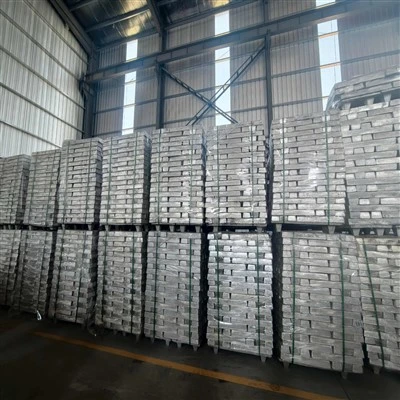
If you’re a mill operator, metallurgist, or anyone working with steelmaking who’s dealing with sulfur headaches, I’m here to help. We don’t just supply FeSi—we work with you to tweak your process, test your batches, and make sure your FeSi is tailored to your exact needs. Whether you’re making structural steel, automotive parts, or heavy industrial equipment, we’ve got the right grade, the right dosage guidance, and the expertise to make that FeSi-sulfur reaction work for you, not against you. Hit us up to chat through your current challenges, no sales pitch required—just straight talk about how to make your heats cleaner, cheaper, and more consistent.
Ferroalloy References:
- Fruehan, R. J. (1998). The Making, Shaping, and Treating of Steel (11th ed.). AI Steel Society.
- Kim, S., & Lee, H. (2012). Desulfurization mechanisms in secondary steelmaking with ferrosilicon-based alloys. ISIJ International, 52(7), 1254-1261.
- Naylor, M. (2005). Practical Steelmaking: A Guide to Secondary Metallurgy. Maney Publishing.
- US Environmental Protection Agency. (2019). Industrial Emissions Guidelines for Steel Manufacturing. EPA Office of Air and Radiation.
Jiaocheng County Zemei Metal Co., Ltd.
As one of the most professional ferrosilicon manufacturers and suppliers in China, we also support customized service with low price. Please feel free to wholesale bulk high quality ferrosilicon in stock here from our factory. Welcome to contact us for quotation.
Address: Jiaocheng Zemei Metal Co., Ltd., Shihou Village, Jiaocheng County, Lüliang City, Shanxi Province, China
E-mail: dorissunzm@gmail.com
WebSite: https://www.zmfesimg.com/
