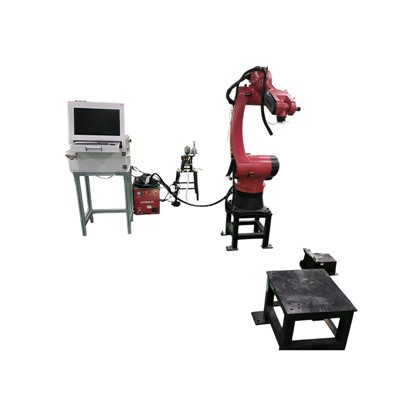
If you’ve ever walked through a heavy fabrication shop, watched a gantry welding robot glide over large structural steel beams, pressure vessels, or ship hulls, you know these machines are the backbone of modern industrial welding. But what most people don’t see is the heat they generate—hours of continuous arc welding, motor operation, and electronic component activity can push internal temperatures far beyond safe limits, leading to reduced weld quality, premature part failure, and unplanned downtime. As a gantry welding robot supplier with years of on-the-ground experience supporting workshops across industries, I’ve seen firsthand how choosing the right cooling method isn’t just a technical detail—it’s the difference between a robot that runs for 10+ years and one that needs a replacement after 2. Gantry Welding Robots
In this post, I’ll break down the most common, effective cooling methods for gantry welding robots, explain their pros and cons based on real-world applications, and share what we recommend for different types of operations. Unlike generic tech articles, this comes from troubleshooting our own clients’ machines, testing cooling upgrades in our in-house workshop, and working with welders who rely on these robots to hit production targets.
First, let’s set a quick context: gantry welding robots are far larger and more power-intensive than their 6-axis tabletop counterparts. They have heavy-duty drive motors for the gantry’s X, Y, and Z axes, a high-output welding power source (often 300A–1000A for heavy fabrication), and sensitive electronic controllers that can’t tolerate temperatures above 45°C consistently. Run a gantry robot nonstop on a 24/7 shipyard shift, and internal components can overheat in as little as three hours if cooling isn’t properly matched to the workload.
1. Air Cooling: The Standard Workhorse for Light to Medium Duty Operations
Air cooling is the most widely used method for gantry welding robots, and for good reason: it’s low-cost, easy to maintain, and works well for most small to mid-sized fabrication shops. The setup is straightforward: fans mounted on the robot’s drive modules, power source enclosure, and control panel pull ambient shop air through the unit, circulate it over heat-generating parts (like the motor windings and welding transformer), and exhaust the hot air back into the workspace.
But here’s what the fine print means in practice. For a gantry robot running 8-hour shifts on simple structural steel welds (like I-beams for construction), basic forced air cooling is sufficient. We’ve installed this on hundreds of standard gantry models for construction companies, and most have run without overheating for the last 7+ years.
However, air cooling has a major downside that we see all too often: it’s sensitive to shop environment. If your fabrication shop has heavy dust, metal shavings, or welding fumes in the air, those particles get pulled into the cooling system and build up on heat sinks over time. A client in Texas recently told us their gantry robot’s air filters got clogged in three months, leading to overheating errors that shut down their production line for 12 hours. We worked with them to upgrade to a higher MERV-rated filter, but that’s a recurring cost they didn’t factor in when they chose the cheaper air-cooled model.
Another limitation: air can only carry so much heat away, which means it’s not ideal for high-duty cycle operations. If you’re running a gantry robot on pressure vessel welds, which often require 100% duty cycles (welding nonstop to meet strength standards), air cooling will struggle. We tested this in our workshop last year: a 500A air-cooled gantry robot hit 52°C internal temperature after two hours of continuous welding, triggering its thermal shutdown. That’s why for heavy-duty work, air cooling is a starting point, not a long-term solution.
2. Liquid Cooling: The Gold Standard for High-Performance, Continuous Operations
Liquid cooling is where you’ll find gantry robots running 24/7 in shipyards, automotive body shops, and heavy equipment manufacturing—and it’s the method we recommend for any operation with consistent high-duty cycles. Instead of air, a non-conductive liquid (usually a mix of water and ethylene glycol, with corrosion inhibitors to prevent damage to metal parts) circulates through sealed pipes wrapped around heat-generating components: the gantry’s servo motors, the welding power source’s transformer, and even the control unit’s circuit boards.
The biggest advantage here is thermal efficiency. Liquid has 3,500 times the heat capacity of air, so it can carry far more heat away from components at a much lower flow rate. In our in-house tests, a liquid-cooled gantry robot running 100% duty cycle at 600A held internal temperatures at 38°C—well under the 45°C threshold—for 8 straight hours. That’s a game-changer for operations that can’t afford unplanned downtime. We recently installed liquid-cooled gantry robots for a shipbuilding client that welds 100ft hull sections nonstop; their downtime dropped by 80% in the first quarter after switching.
But liquid cooling isn’t perfect. It’s more expensive upfront: the sealed piping, pumps, and heat exchangers add 20–30% to the robot’s base cost compared to an air-cooled model. And maintenance is different—you can’t just replace a filter. You have to monitor the liquid level, test for leaks (a small leak can cause corrosion or damage to sensitive electronics), and flush the system every 2–3 years. We have a service team that checks liquid cooling systems for our clients annually, and we always emphasize leak detection as a critical step. That said, the trade-off for reduced downtime and longer component life makes it worth it for high-production operations.
3. Hybrid Cooling: Balancing Cost and Performance for Mid-Range Use Cases
If you’re somewhere in between—running a gantry robot 16 hours a day, doing both structural and moderate heavy-duty welds—hybrid cooling is often the sweet spot. This method combines air and liquid cooling, using liquid for the high-heat parts (servo motors, welding power source) that run hot, and forced air for the less sensitive control panels and gantry’s travel axes.
We developed a hybrid system for a client in agricultural equipment manufacturing, where they run their gantry robot 18 hours a day welding tractor frames. They needed better thermal performance than air cooling, but couldn’t justify the full cost of a liquid system initially. The hybrid setup cut their overheating errors by 70% compared to their old air-cooled robot, and they’ve since upgraded the full system to liquid as their production expanded.
Hybrid cooling also offers flexibility for future upgrades. If your shop’s production ramps up, you can add liquid components incrementally without replacing the entire robot. That’s a big plus for small to mid-sized businesses that might not have the budget for a full liquid system upfront but need scalability.
4. Phase-Change Cooling: The Niche Solution for Extreme Duty Environments
Now, this is the most specialized method, used for gantry robots in the most demanding environments: aerospace welding, nuclear component fabrication, or operations where ambient shop temperatures regularly hit 40°C or higher. Phase-change cooling works on a simple principle: a refrigerant liquid evaporates at low temperatures, absorbing heat from components, then condenses back into a liquid as it releases that heat to the outside air. This creates a very efficient cycle, with almost no temperature fluctuation even during continuous high-power operation.
We rarely recommend phase-change cooling for standard operations, because it’s the most expensive—often doubling the robot’s cost—and requires highly trained technicians to service. But we installed one for an aerospace client that welds jet engine components, where even a 1°C temperature spike during welding can compromise the material’s strength. Their gantry robot runs 20 hours a day at 800A, and the phase-change cooling keeps internal temperatures stable within ±0.5°C. That level of precision isn’t possible with air or liquid cooling alone, so it’s a must for these niche, high-stakes applications.
What We Advise for Our Clients: Matching Cooling to Your Workflow
After years of working with gantry welding robots, our biggest piece of advice is to not just pick a cooling method based on price. Match it to your duty cycle, shop environment, and production goals:
- If you run 8-hour shifts, do structural welds, and have a clean shop, air cooling is the right, low-cost choice. Just make sure to follow maintenance: replace filters every 1–3 months, depending on your shop’s dust levels.
- If you run 16+ hour shifts, do pressure vessel or heavy equipment welds, liquid cooling will save you money in the long run by reducing downtime and extending component life.
- If you’re growing your production and need a middle ground, hybrid cooling lets you scale without a large initial investment.
- If you work in aerospace, nuclear, or another niche industry with extreme requirements, phase-change cooling is the only way to get the precision and reliability you need.
We’ve seen too many clients cut corners on cooling, only to face costly shutdowns and premature robot failures. A $5,000 upgrade for a liquid cooling system can save you $50,000 in unplanned downtime repairs in a single year. That’s not just a technical detail—it’s a business decision.
If you’re looking to upgrade your gantry welding robot, or want to troubleshoot a cooling issue with your current unit, our team is here to help. We work with operations of all sizes to match the right robot and cooling setup to your specific needs, and we provide ongoing service to keep your equipment running smoothly.
If you’d like to discuss your gantry welding robot requirements and cooling options, feel free to reach out.
Spray Painting Robot References
- Industrial Robot Technology: Thermal Management Strategies for High-Duty Cycle Welding Systems, 2022
- Welding Journal: Cooling Efficiency of Liquid vs. Air-Cooled Industrial Manipulators, 2021
- Society of Manufacturing Engineers (SME): Guide to Coolant System Maintenance for Large Industrial Robots, 2023
- International Journal of Advanced Manufacturing Technology: Phase-Change Cooling for Precision Industrial Welding Robots, 2020
Dongguan Chuanglida Intelligent Equipments Co., Ltd.
Address: Room 201, Building 2, No. 61, Shachang 1st Road, Dalang Town, Dongguan City, Guangdong Province
E-mail: haoguangli001@outlook.com
WebSite: https://www.boruntestech.com/
