As a supplier of Dielectric Strength Testers, I often encounter questions from customers about various technical aspects of our products. One of the frequently asked questions is about the internal resistance of a Dielectric Strength Tester. In this blog, I’ll delve into what the internal resistance of a Dielectric Strength Tester is, its significance, and how it impacts the performance of the tester. Dielectric Strength Tester
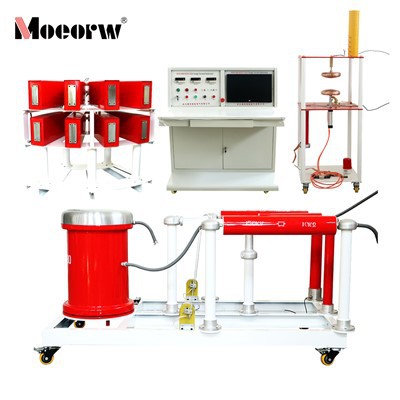
Understanding the Basics of a Dielectric Strength Tester
Before we discuss the internal resistance, let’s briefly understand what a Dielectric Strength Tester is. A Dielectric Strength Tester, also known as a hipot tester, is a device used to test the electrical insulation properties of a component or a device under test (DUT). It applies a high voltage to the DUT for a specified period to check if the insulation can withstand the applied voltage without breaking down. This is crucial for ensuring the safety and reliability of electrical equipment, as a faulty insulation can lead to electrical shocks, short – circuits, and other hazards.
What is Internal Resistance?
The internal resistance of a Dielectric Strength Tester is the resistance that exists within the tester itself. It is an inherent property of the electrical components and circuits inside the tester. In simple terms, it is the opposition that the tester presents to the flow of electric current when a voltage is applied.
Mathematically, according to Ohm’s law (V = IR, where V is voltage, I is current, and R is resistance), when a current flows through the internal resistance of the tester, there will be a voltage drop across it. This voltage drop can affect the actual voltage applied to the DUT.
Significance of Internal Resistance
-
Accuracy of Voltage Application
The internal resistance plays a vital role in determining the accuracy of the voltage applied to the DUT. When the tester is connected to the DUT, the total voltage source (the output voltage of the tester) is divided between the internal resistance of the tester and the resistance of the DUT. If the internal resistance is too high, a significant portion of the output voltage may be dropped across the internal resistance, resulting in a lower voltage being applied to the DUT than the set value. This can lead to inaccurate test results, as the DUT may not be subjected to the intended high voltage for proper insulation testing. -
Current Limitation
The internal resistance also serves as a current – limiting element. In a dielectric strength test, it is important to limit the current flowing through the DUT to prevent damage to the DUT in case of an insulation breakdown. The internal resistance restricts the current flow, ensuring that the current does not exceed a safe level. For example, if the DUT has a low – resistance path due to a faulty insulation, the internal resistance will limit the current to a value that is safe for the tester and the DUT. -
Safety
From a safety perspective, the internal resistance helps in protecting the operator and the equipment. In the event of a short – circuit or a breakdown in the DUT, the internal resistance limits the current, reducing the risk of electrical shock to the operator and preventing excessive damage to the tester.
Factors Affecting the Internal Resistance
-
Component Quality
The quality of the electrical components used in the Dielectric Strength Tester has a significant impact on the internal resistance. High – quality resistors, capacitors, and other components with low resistance values and stable characteristics will result in a lower internal resistance. On the other hand, using low – quality components may lead to higher internal resistance and less stable performance. -
Circuit Design
The design of the internal circuit of the tester also affects the internal resistance. A well – designed circuit with proper layout and component placement can minimize the internal resistance. For example, minimizing the length of the conductive paths and reducing the number of connections can help reduce the overall resistance. -
Temperature
Temperature can have an impact on the internal resistance of the tester. As the temperature increases, the resistance of some electrical components may change. For example, the resistance of a resistor may increase with temperature. This can cause the internal resistance of the tester to vary, which may affect the accuracy of the test results. Therefore, it is important to operate the Dielectric Strength Tester within the specified temperature range.
Measuring the Internal Resistance
Measuring the internal resistance of a Dielectric Strength Tester can be a complex process. One common method is to use a known load resistor and measure the voltage across it and the current flowing through it. By applying Ohm’s law, the internal resistance can be calculated. However, this method requires careful calibration and accurate measurement of the load resistor and the electrical parameters.
Another approach is to use specialized test equipment that is designed to measure the internal resistance of electrical devices. These instruments can provide more accurate and reliable measurements.
Impact on Test Results
The internal resistance of a Dielectric Strength Tester can have a significant impact on the test results. If the internal resistance is too high, the voltage applied to the DUT may be lower than the set value, leading to false – pass results. This means that a faulty DUT may pass the test when it should actually fail. On the other hand, if the internal resistance is too low, the current flowing through the DUT may be too high, which can damage the DUT and also pose a safety risk.
Therefore, it is essential to ensure that the internal resistance of the Dielectric Strength Tester is within an acceptable range. Regular calibration and maintenance of the tester can help to ensure the accuracy of the internal resistance and the reliability of the test results.
Our Commitment as a Supplier
As a supplier of Dielectric Strength Testers, we are committed to providing high – quality products with accurate internal resistance values. We use only the best – quality components in our testers and employ advanced circuit design techniques to minimize the internal resistance. Our testers are also rigorously tested and calibrated before leaving the factory to ensure that they meet the highest standards of accuracy and reliability.
If you are in the market for a Dielectric Strength Tester, we encourage you to contact us for a detailed discussion about your specific requirements. Our team of experts can provide you with in – depth information about our products, including the internal resistance characteristics, and help you choose the right tester for your application. Whether you are testing small electronic components or large electrical equipment, we have the right solution for you.
CT PT Analyzer In conclusion, understanding the internal resistance of a Dielectric Strength Tester is crucial for ensuring the accuracy and reliability of insulation testing. By choosing a high – quality tester with a well – controlled internal resistance, you can be confident in the safety and performance of your electrical equipment.
References
- Electrical Engineering Handbook, Third Edition, edited by Richard C. Dorf
- Principles of Electric Circuits, Tenth Edition, by Thomas L. Floyd
- Dielectric Testing Standards, International Electrotechnical Commission (IEC)
Wuhan Moen Intelligent Electric Co., Ltd.
As one of the most professional dielectric strength tester manufacturers in China, we’re featured by quality products and good price. Please rest assured to buy high quality dielectric strength tester in stock here and get quotation from our factory. Customized orders are welcome.
Address: Building A, No.1, Fenghuangyuan 2nd Road, Donghu New Technology Development Zone, Wuhan, Hubei, China
E-mail: info@hvhipotsystem.com
WebSite: https://www.hvhipotsystem.com/
