Evaluating the quality of dithiocarbamate collectors is a crucial aspect in the mining and metallurgical industries. As a long – standing supplier of dithiocarbamate collectors, I’ve witnessed firsthand the significant impact that the quality of these collectors can have on the efficiency of mineral flotation processes. In this blog, I’ll share some key factors and methods for assessing the quality of dithiocarbamate collectors. Dithiocarbamate Collectors
Chemical Purity
One of the most fundamental aspects of evaluating dithiocarbamate collectors is their chemical purity. High – purity dithiocarbamate collectors usually perform more predictably and effectively. Impurities in the collectors can not only reduce their collection ability but also cause unwanted side – reactions in the flotation process.
To determine the chemical purity of dithiocarbamate collectors, advanced analytical techniques such as high – performance liquid chromatography (HPLC) are commonly used. HPLC can separate different components in the collector sample and quantify the amount of the target dithiocarbamate compound accurately. A high – quality dithiocarbamate collector should have a purity level of at least 90%, although in some high – end applications, purities of 95% or even higher may be required.
Another method is nuclear magnetic resonance (NMR) spectroscopy. NMR can provide detailed information about the molecular structure of the dithiocarbamate collector. By analyzing the NMR spectrum, we can identify any structural impurities or deviations from the expected molecular structure. This is especially important because even small structural changes can affect the collector’s reactivity and selectivity in the flotation process.
Collection Ability
The primary function of dithiocarbamate collectors is to selectively adsorb onto the surface of target minerals and make them hydrophobic so that they can be separated from the gangue minerals during the flotation process. Therefore, evaluating the collection ability is of utmost importance.
One way to assess the collection ability is through bench – scale flotation tests. In these tests, a small amount of the ore sample and the dithiocarbamate collector are added to a flotation cell. The cell is then agitated, and air is injected to form bubbles. The froth that forms on the surface is skimmed off, and the mineral content in the froth and the remaining pulp is analyzed. By comparing the grade and recovery of the target mineral with different dosages of the collector, we can determine the optimal dosage and evaluate the overall collection performance of the collector.
The collection ability is also related to the collector’s selectivity. A good dithiocarbamate collector should be able to selectively adsorb onto the target mineral while having minimal interaction with the gangue minerals. This can be evaluated by conducting flotation tests on complex ores containing multiple minerals. By measuring the recovery and grade of different minerals in the concentrate, we can assess the collector’s ability to distinguish between target and non – target minerals.
Stability
Dithiocarbamate collectors need to be stable under various conditions during storage and use. Unstable collectors can decompose over time, leading to a decrease in their performance.
One factor affecting stability is temperature. Dithiocarbamate collectors are generally sensitive to high temperatures. At elevated temperatures, they may undergo thermal decomposition, which can generate harmful by – products and reduce the collector’s effectiveness. To evaluate the thermal stability of a dithiocarbamate collector, thermogravimetric analysis (TGA) can be employed. TGA measures the weight change of a sample as it is heated at a constant rate. A high – quality collector should have a relatively high decomposition temperature, indicating good thermal stability.
Another aspect is chemical stability. Dithiocarbamate collectors can react with certain chemicals in the ore pulp, such as metal ions or oxidizing agents. These reactions can either enhance or reduce the collector’s performance. For example, in the presence of heavy metal ions, some dithiocarbamate collectors may form insoluble complexes, which can precipitate out of the solution and reduce the available collector concentration. To evaluate chemical stability, solution – based experiments can be conducted, where the collector is exposed to different chemical environments, and its performance is monitored over time.
Solubility
The solubility of dithiocarbamate collectors in water is an important characteristic. A proper solubility is necessary for the collector to be evenly distributed in the ore pulp and effectively interact with the mineral surfaces.
If the collector has poor solubility, it may form aggregates or precipitates in the solution, reducing its contact area with the minerals and thus its collection efficiency. On the other hand, if the solubility is too high, the collector may be easily washed away during the flotation process, also leading to a decrease in performance.
Solubility can be measured by dissolving a known amount of the collector in a fixed volume of water at a specific temperature and stirring for a certain period. The undissolved portion is then filtered out, and the concentration of the dissolved collector in the solution is determined. A high – quality dithiocarbamate collector should have a solubility that is appropriate for the specific flotation process, usually within a certain range that can be optimized through experimentation.
Particle Size and Distribution (if applicable)
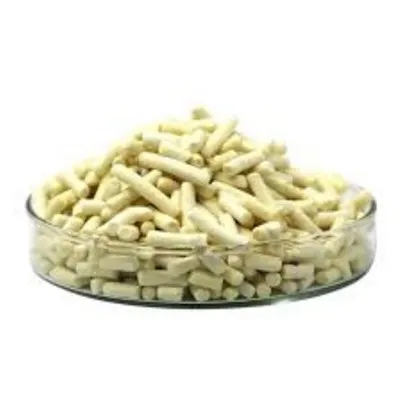
In some cases, dithiocarbamate collectors may be in a solid form, and the particle size and its distribution can affect their performance. Smaller particle sizes generally provide a larger surface area, which can enhance the collector’s interaction with the minerals.
Particle size analysis can be carried out using techniques such as laser diffraction. This method can accurately measure the size distribution of the collector particles. A narrow particle size distribution is often preferred, as it ensures more uniform behavior of the collector in the flotation process. If the particle size is too large, the collector may not disperse well in the ore pulp, while a very wide distribution may lead to inconsistent performance.

In conclusion, evaluating the quality of dithiocarbamate collectors is a multi – faceted process that requires the consideration of various factors. By carefully assessing the chemical purity, collection ability, stability, solubility, and particle size (if applicable), we can ensure that we are providing high – quality collectors to our customers.
Dithiophosphate If you are in the mining or metallurgical industry and are looking for reliable dithiocarbamate collectors, we are here to offer you top – notch products. We have a team of experienced professionals who can provide technical support and guidance on the selection and use of our collectors. Contact us for more information and to start a procurement discussion. We are committed to helping you optimize your flotation processes and achieve better results.
References
- Smith, J. (2018). "Advances in Mineral Flotation Technology". Mining Journal Press.
- Johnson, A. (2019). "Analysis of Chemical Collectors in Mineral Processing". Chemical Engineering Reviews.
- Brown, C. (2020). "Stability and Reactivity of Dithiocarbamate Compounds". Journal of Chemical Sciences.
Bitop Bihope Qingdao Mining Co., Ltd
Bitop Bihope Qingdao Mining Co., Ltd. is one of the most professional sulfur and nitrogen manufacturers and suppliers in China, featured by quality products and low price. Please rest assured to buy discount sulfur and nitrogen in stock here and get quotation from our factory. Customized orders are welcome.
Address: Room 410, 4th Floor, Shengquan Business Building, No. 263 Yitong Road, Huangdao District, Qingdao City, Shandong Province, China
E-mail: btbhmining@163.com
WebSite: https://www.btbhmining.com/
