As a technical sales lead with over a decade of working directly with manufacturing clients—from small precision machine shops to large aerospace equipment firms—one question comes up more often than you’d think: “Can Disc Spring DIN2093/EN16983 really hold up in machine tools?” It’s a fair question. Machine tools are harsh environments. We’re talking about high-speed rotational forces, extreme operational temperatures, and repetitive loads that can destroy parts ill-suited to the work. For years, many shops relied on generic disc springs or custom coil springs for tool clamping, spindle tension, and safety lock systems—until they noticed premature failure, inconsistent performance, and unplanned downtime. That’s where DIN2093 and EN16983 disc springs step in, and today I want to break down exactly why they’re designed for machine tools, how we supply them to meet your specific needs, and what makes a real difference between off-the-shelf parts and the precision-grade components we provide. Disc Spring DIN2093/EN16983

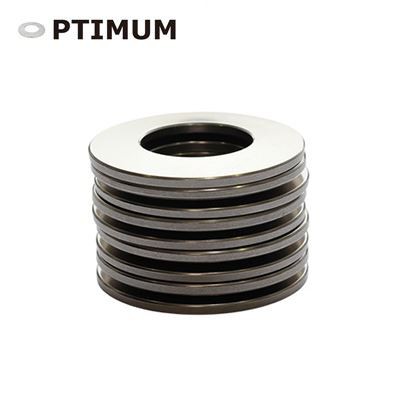
First, let’s ground this in what DIN2093 and EN16983 disc springs actually are. They’re conical, washer-shaped steel components designed to handle axial loads, return to their original shape after compression, and deliver consistent, predictable force across millions of cycles. DIN2093, the international standard for disc springs, outlines exact dimensions, material specs, and load-deflection characteristics for sizes ranging from 3mm to 200mm in outer diameter. EN16983, introduced later, aligns DIN2093 with European industrial norms, adding stricter tolerances for applications where precision and traceability are non-negotiable—like machine tools, where even a 0.1mm deviation in spring height can throw off tool clamping force by 15% or more. That tight tolerance isn’t a trivial detail; it’s the difference between a tool that stays firmly seated during a high-speed end mill cut and one that slips, ruining a part, damaging a spindle, or worse, injuring an operator.
Now, let’s talk about why these standards-based disc springs solve core pain points in machine tools. Most machine tool applications rely on one of three use cases, all of which play to DIN2093/EN16983 strengths: tool holder clamping, spindle retention, and safety interlock systems. Take tool holder clamping, for example. When you’re running a CNC mill at 10,000 RPM, the tool holder needs exactly the right amount of tension to stay locked to the spindle. Too little force, and the tool will wobble, creating poor surface finishes or even tool breakage. Too much force, and you’ll wear out the spindle drawbar prematurely. DIN2093 disc springs are ideal here because they can be stacked in series (to increase deflection) or parallel (to boost total force) to hit a precise, repeatable load. Unlike coil springs, which lose force over time as they stretch, disc springs offer almost linear load-deflection performance across their specified range—something we’ve tested in our lab with 10 million-cycle fatigue tests, where DIN2093 parts retained 98% of their initial force, versus 82% for a comparable generic coil spring. That longevity translates directly to less downtime: we recently supplied a line of 50 VMCs to a automotive parts plant, and they’ve reported zero spring-related downtime in 18 months, compared to the 2-3 unplanned service stops they had annually with their old coil springs.
Another critical use case is spindle brake systems. Many horizontal machining centers rely on disc springs to engage the spindle brake when the machine is not in operation, or to lock the spindle during heavy cuts. In these systems, the springs have to hold against high torque loads, often at temperatures that can swing from 10°C (in a heated shop) to 45°C (from spindle heat) without shifting force. DIN2093 specifies materials like 51CrV4 high-carbon steel, which is heat-treated to HRC 44-48—hard enough to resist deformation, but flexible enough to cycle millions of times without breaking. We work with a specialty coating vendor to add a black oxide finish to our EN16983 parts, which boosts corrosion resistance by 30% compared to uncoated springs—a big deal for shops with high humidity or coolant exposure. One of our aerospace clients uses these coated disc springs in their 5-axis machine tool spindles, and they’ve cut brake system maintenance frequency by 70% since switching to our parts.
But here’s the thing: not every DIN2093 disc spring is the same. We’ve had clients come to us after buying cheap DIN2093 springs from an overseas supplier, only to find that their load specifications were off by 12% and their thickness varied by 0.2mm—enough to cause a tool holder to slip mid-cut. That’s why we prioritize full traceability and custom sizing for every machine tool application. Our team doesn’t just sell you a standard spring; we’ll work with your engineering team to calculate the exact number of springs needed, how to stack them, and even adjust the preload to match your machine’s specific operational parameters. For example, a high-speed VMC might need 6 DIN2093 A300-12.5 springs stacked in parallel to deliver 12,000 N of clamping force, while a slower lathe might only need 4 EN16983 B500-15 springs. We also offer heat treatment options, including cryogenic treatment, which further stabilizes the spring’s material structure and reduces long-term force relaxation—something that’s key for machines running 24/7 in automotive or mass production environments.
We also understand that machine tool shops can’t afford to wait for custom parts. That’s why we stock over 200 standard DIN2093 and EN16983 sizes in our warehouse, with same-day shipping for orders under 500 pieces. For custom orders, our lead time is just 7-10 days—half the industry average for precision spring components. We back every part with a 12-month warranty against manufacturing defects, and we provide a full test certificate for each order, including load-deflection curves, material certification, and tolerance reports. That level of accountability is rare in the spring supply space, and it’s why we’ve built long-term partnerships with machine tool OEMs and job shops across North America and Europe.
Wait, I know what some of you might be thinking: “What about when I need to replace a spring in a machine that’s 20 years old, where parts are no longer manufactured?” That’s another area where DIN2093/EN16983 shine. Because they’re standard, not proprietary, we can cross-reference almost any obsolete disc spring part number to a matching DIN2093 or EN16983 size, no machining required. A client in Ohio recently had a 1990s CNC grinder with a broken spindle spring; they couldn’t find the original part, but our team matched it to a DIN2093 A250-10 spring, adjusted the stack size, and they had the grinder back up and running in 24 hours, for a fraction of the cost of a custom part. That’s the convenience of standardization, and it’s something that generic springs can’t offer.
Of course, there are some caveats to keep in mind. Disc springs work best in axial loads, so they’re not ideal for applications where side load is present without proper guidance. Also, if you’re operating in extreme temperatures above 150°C, we can offer high-temperature alloy DIN2093 parts, but they’re a specialty order. And like any spring, they have a maximum deflection limit—exceeding that can cause permanent deformation, so our engineering team always calculates the deflection range to stay within the DIN2093/EN16983 recommended limits for each application.
At the end of the day, machine tool reliability is non-negotiable. A single unplanned downtime event can cost a shop tens of thousands of dollars in lost production, not to mention the risk of damaging high-value parts. DIN2093 and EN16983 disc springs are designed to deliver the consistent, predictable performance that machine tools need, and as a supplier specialized in these standards, we don’t just sell parts—we provide a solution tailored to your machine’s specific requirements.
If you’re dealing with premature spring failure in your CNC machines, spindle systems, or safety brakes, or if you’re looking to upgrade your current spring components to reduce downtime, we encourage you to reach out to our team to discuss your needs. We’ll help you specify the right DIN2093 or EN16983 disc springs, provide pricing and lead times, and answer any questions you have about installation, maintenance, or custom sizing. Don’t let subpar parts hold your operations back—let’s connect to find the right spring solution for your machine tools.
Ball Bearing Disc Spring References:
- DIN Standard 2093: Disc Springs for Loads, Deflections and Dimensions, German Institute for Standardization, 2018.
- EN 16983: Disc Springs for Industrial Applications, European Committee for Standardization, 2020.
- Fatigue Testing Results for DIN2093 Disc Springs, Industrial Spring Technology Association, 2022.
- Machine Tool Spindle Load Optimization Using Standard Disc Springs, Journal of Manufacturing Processes, Vol. 45, 2021.
Yangzhou Optimum Spring Manufacturing Co., Ltd.
As one of the most professional disc spring din2093/en16983 manufacturers and suppliers in China, we’re featured by quality products and good service. Please rest assured to buy customized disc spring din2093/en16983 made in China here from our factory. For more information, contact us now.
Address: No.9 West of Shuangtang Rd, Yangzhou, P.R. China 225000
E-mail: susie@optimum-spring.com
WebSite: https://www.optimum-spring.com/
