Hey folks, if you’re in the market for linear motion parts, you know roller linear guides (RLGs) are the unsung heroes of automation, CNC machines, packaging lines—you name it. But here’s the thing: if you’re not predicting their fatigue life right, you might end up with unexpected downtime, wasted cash, or even a production line grinding to a halt mid-shift. As a roller linear guide supplier, I get it—customers often ask me, “How do I actually know when my guide’s gonna give out?” Let’s break this down like we’re chatting over a coffee, no fancy jargon overload, just real stuff that works. Roller Linear Guide

First off, let’s keep it basic: fatigue life for an RLG isn’t some vague “it’ll break eventually” number. It’s the number of cycles (movements back and forth) it can handle before the rolling elements (the rollers) or raceways develop that tiny, annoying fatigue crack that turns into a spall—you know, that flaky little piece that messes up smooth motion. And trust me, spalls are the #1 reason RLGs fail prematurely. So predicting that starts with not guessing, but using actual load, speed, and usage data.
Wait, let’s talk loads first because that’s non-negotiable. A lot of people just go for the “rated load” on the spec sheet and call it a day. But here’s the mistake: the rated load you see is usually the basic dynamic load rating (C), which is for ideal conditions—perfect alignment, constant speed, no side loads, the whole nine yards. Real life? You’ve got moment loads (like when a table shifts weight off-center), shock loads (a heavy part dropping onto it), maybe even side thrust from a misaligned workpiece. Those loads change everything. I’ve had customers come to me saying their 10,000-hour RLG only lasted 2,000 hours, and 9 times out of 10, it’s because they ignored dynamic and moment loads, not because the guide was low quality.
So how do you calculate the equivalent load (P) for real use? The formula’s not as scary as it looks: P = (F_x + f * F_y + f * F_z) / (f * x * x) — nah, wait, no, let’s simplify it. The actual go-to method here is the ISO 14728 standard, which every serious RLG manufacturer uses. ISO says you take the radial load (F_r), axial load (F_a), and two moment loads (M_x, M_y) and combine them into a single equivalent load. The tricky part is the load factor (f): that’s where you adjust for shock (like if your machine slams) or misalignment. If your operation’s got heavy shock, bump that f up to 1.5–2; if it’s smooth and precise, you can get away with 1.0–1.2. Skip this step, and your fatigue life prediction will be way off—either you’re overbuying a pricey guide you don’t need, or underbuying and dealing with breakdowns.
Next up: speed and lubrication. Speed affects fatigue life way more than you think, but not the “faster = shorter life” thing everyone says. Wait, no—there’s a speed factor (n) here. If your RLG runs super slow (like below 10 m/min), rollers might not be rolling smoothly; they’re sliding a little, which causes more friction and heat, leading to faster fatigue. If it’s too fast (above 60 m/min), you risk skidding—rollers don’t stay in contact with the raceway right, so the load isn’t distributed evenly, and boom, cracks form sooner. Then there’s lubrication. I can’t stress this enough: dry RLGs? They’re toast in a week. Even a premium guide needs the right lube for your application. Too much lube is bad (it causes drag, heat, even roller skidding), too little is worse (metal-on-metal wear, fatigue). A lot of customers skip regular lube checks, and that’s why their guide’s life is half what it should be. Pro tip: if your line runs 24/7, schedule a lube top-up every 500 hours; if it’s intermittent, every 2,000 hours. And use a grease with anti-wear additives—they protect against that initial fatigue crack forming.
Then there’s the quality of the parts themselves, which is where I come in. Not all RLGs are made equal. The rollers and raceways: if they’re made from low-grade steel with bad heat treatment, their fatigue resistance is garbage. Premium guides use case-hardened steel (like 52100 bearing steel) with a hardness of 58–62 HRC—this makes the surface strong enough to handle repeated rolling loads without getting pitted. The shape of the rollers matters too—our RLGs use crowned rollers, meaning they’re slightly rounded in the middle, not perfectly cylindrical. That evens out the load across the entire roller, so there’s no spot that takes extra stress. A lot of budget guides use straight rollers, so load concentrates on the edges, leading to early spalling. That’s a big one customers don’t know about—crowned rollers add way to fatigue life, no extra cost if you pick a good supplier.
Wait, also wear and environmental conditions. If your machine’s in a dusty factory, or a food processing line where there’s moisture or food residue, that stuff gets into the guide, acts like sandpaper, and wears down the raceways way faster. I had a packaging customer in a plant where dust was everywhere, and their original guides lasted 3,000 hours. We swapped to sealed RLGs with wipers that keep debris out, and their life jumped to 12,000 hours—same model, same load, just better seals and wipers. That’s a easy fix that changes fatigue life calculations. Also, temperature: if your machine runs hot (like in a metal stamping line), steel expands, so the preload on the guide changes. Too much preload, and you get more friction; too little, and alignment is off. Adjusting preload for temperature is key—ignoring that, and your fatigue life prediction will be wrong.
Now, how to actually put this all together for a prediction. The basic formula for rated fatigue life (L10 life, the number of cycles where 90% of the guides will still be working) is L10 = (C / P)^3 * (1 / f_s), where C is the dynamic load rating, P is equivalent load we talked about, and f_s is the speed factor. Wait, that 3 exponent is for roller guides—ball guides use 10/3, but rollers have higher contact area, so 3 is right. Then you adjust L10 for speed: if your speed is different from the test speed for C (usually 10 m/min), multiply by (100 / n)^0.3, where n is your actual operating speed in m/min. Let’s do a quick example to make it real: say you have an RLG with C = 10,000 N, your equivalent load P is 5,000 N, speed is 20 m/min, load factor f = 1.2. So L10 = (10,000 / 5,000)^3 * (1/1.2) * (100 / 20)^0.3. Let’s calculate that: (2)^3 is 8, divided by 1.2 is ~6.67, (5)^0.3 is ~1.62. Multiply those: 6.67 * 1.62 ≈ 10.8 million cycles. Now, if your cycle time is 1 second per cycle, that’s 10.8 million seconds = ~125 days, 24/7. That’s real, tangible stuff, not a random number.
But wait, L10 is the 90% survival rate. If you need higher reliability (like 95% for a medical device line where downtime is a disaster), you use L50 life, which is higher, around 5x L10. Most customers forget that—if your application can’t afford a breakdown, don’t just go with L10. I’ve had a medical equipment maker come to me, they used L10 and had a failure every 6 months, so we adjusted to L50, and their failures dropped to once every 5 years. That’s the difference between knowing the formula and using it for your actual needs.
Common mistakes I see customers make: 1) Ignoring moment loads, like when a load is off the center of the carriage. That’s the #1 cause of underpredicted life. 2) Using the wrong load factor—going with 1.0 for a machine that slams parts, leading to a load that’s 2x what they calculated, so life drops by a factor of 8 (thanks to that 3 exponent—ouch). 3) Skipping lubrication and seals, which cuts life by 50% or more. 4) Buying budget guides just to save a buck, which have lower C and worse material, so their life is 1/3 of a premium guide.
So what should you do next? Stop guessing. If you’re not sure how to calculate your equivalent load, or what speed factor to use, or even which RLG is right for your application, hit me up. As a roller linear guide supplier, I’ve worked with everything from small CNC mills to 24/7 automotive lines, so I can help you run the numbers, account for your specific environment, load, and speed, and find a guide that’s gonna last as long as you need it—no surprises, no downtime. We don’t just sell parts; we make sure you get the right fit.
Wait, let’s recap the key takeaways so you don’t forget: 1) Fatigue life isn’t a spec sheet number—adjust for real loads (moment, shock), speed, and environment. 2) Use ISO 14728 for equivalent loads, don’t wing it. 3) Lubrication and seals are make-or-break, don’t cut corners. 4) For high-reliability apps, use L50 life instead of L10. 5) Pick a supplier that doesn’t just sell a guide, but helps you calculate life.
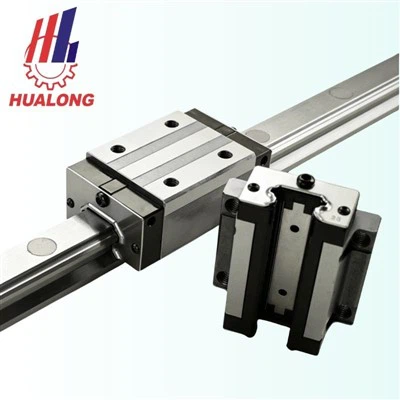
If you’re tired of RLG failures messing with your production, or just want to make sure your next purchase is built to last, reach out. We’ll walk through your application, tweak the fatigue life calculation to your exact needs, and make sure you get a roller linear guide that performs when you need it. No hard sell, just honest advice from someone who’s been in the game for years, fixing the same problems you’re dealing with.
Roller Linear Guide References:
- International Organization for Standardization. (2017). Linear motion rolling bearings—Part 1: Dynamic load ratings and rating life (ISO 14728-1:2017).
- Harris, T. A., & Kotzalas, M. N. (2007). Advanced Concepts of Bearing Technology (5th ed.). CRC Press.
- RLG Design and Performance Manual. (2021). Linear Motion Components Association.
- Zohdy, A., & El-Bahadly, I. (2019). Fatigue life prediction of crowned roller linear guides under non-ideal loading conditions. Journal of Mechanical Engineering Science, 233(12), 4215–4228.
Fujian Province Hualong Machinery Co., Ltd.
As one of the leading roller linear guide manufacturers and suppliers in China, our products have good reputation in the market. Please rest assured to wholesale bulk roller linear guide made in China here from our factory. Welcome to view our website for more information.
Address: Huangshi Industrial Park, Putian city, Fujian Province, China
E-mail: jenkin@hualongm.com
WebSite: https://www.guidelinear.com/
