If you’ve ever stepped into a hydroponics grow room, a rooftop farm, a soil testing lab, or even a home garden focused on precise plant care, you’ve likely encountered an EC meter. Short for electrical conductivity, EC meters measure the ability of a solution to carry an electrical current, a reading that translates directly to the concentration of dissolved salts, nutrients, and total solids in water or growing mediums. For growers, aquaculturists, and water quality specialists, that number isn’t just a statistic—it’s the difference between thriving, high-yield crops and stunted growth, nutrient burn, or even dead plants. EC Meter
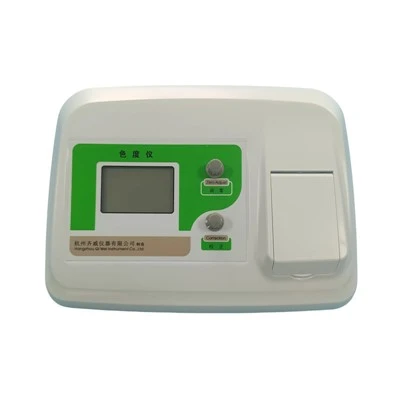
That said, in my years as an EC meter supplier, I’ve seen first-hand that these tools are far from perfect. I’ve worked with small-scale hobbyists who thought their crops were failing because their meter was lying, commercial growers who lost thousands of dollars in harvests due to incorrect readings, and lab technicians who struggled to get consistent results across a single day of testing. The common problems with EC meters aren’t always obvious, and many stem from small mistakes, design flaws, or a lack of basic knowledge about how these devices work. In this post, I’ll break down the most frequent issues we encounter, why they happen, and how to avoid them—especially if you’re relying on your meter for critical growing or water management decisions.
First, one of the most widespread problems we hear about is calibration drift. This is when a meter’s readings slowly shift over time, even if you haven’t dropped it, submerged it in corrosive liquids, or exposed it to extreme temperatures. It happens because the sensors inside EC meters are made of metal (usually stainless steel or platinum) that wears down over time, or because the electronic components that process the current reading degrade with regular use. I once had a client come to us in a panic—they’d been running a commercial lettuce grow operation for six months, and their EC readings had spiked from 1.8 mS/cm to 2.5 mS/cm overnight, which they knew was way too high for young lettuce. They spent three days flushing their entire system, replacing nutrients, and even removing and testing new seedlings, only to find out their meter was calibrated incorrectly. When we tested their old meter in our lab, it was reading 0.7 mS/cm higher than the actual solution. That’s calibration drift in action, and it’s incredibly common. Most people don’t realize that even a properly calibrated meter needs to be recalibrated every 1–3 months, depending on use. If you’re testing a harsh, high-salt solution (like saltwater aquariums or hydroponic systems with heavy fertilizer), drift can happen even faster—sometimes in as little as two weeks. The mistake most users make is assuming their meter stays calibrated forever, but that’s not how these devices work. The small calibration standard packets (usually a solution of known EC value, like 1.41 mS/cm or 12.88 mS/cm) that come with most meters only hold their accuracy for 6–12 months if stored properly, and even then, temperature can affect their concentration.
Next, there’s the problem of temperature compensation errors. This is a big one, because EC readings are highly temperature-dependent. Pure water is a poor conductor, but when you add salts or nutrients, the conductivity rises as temperature increases—roughly 2% per degree Celsius, or 1.1% per degree Fahrenheit. Most EC meters have a feature called automatic temperature compensation (ATC), which adjusts the reading to a standard temperature (usually 25°C or 77°F) so you can compare readings consistently over time. But here’s the catch: not all ATC systems are created equal. Many budget meters (and some mid-range ones) use a generic temperature coefficient of 2% per °C, which works for most nutrient solutions—but only up to a point. If you’re working with a solution that has a very high salt concentration (like a hydroponic system with mature tomatoes, which might have an EC of 3.0 mS/cm or higher), the actual temperature coefficient changes. It’s not exactly 2% per °C anymore; for many high-salt solutions, it’s closer to 2.2% per °C. That small difference might not sound like much, but if you’re testing at 18°C instead of the standard 25°C, a generic ATC could undercompensate by 0.1–0.2 mS/cm, which is enough to throw off a grow schedule. I had a tomato grower reach out to us last year, saying his ATC-equipped meter was telling him his nutrient solution was at the ideal 2.8 mS/cm, but his leaves were showing signs of nutrient deficiency. When we tested his solution manually, we found the actual EC was 3.2 mS/cm—his budget ATC was calibrated for pure water, not for his high-salt tomato nutrient. Another common mistake with ATC is when users turn it off completely, thinking it’s better to take raw readings and adjust them manually. Unless you have a calibrated thermometer and know the exact temperature coefficient of your specific solution, manual adjustment is error-prone. I’ve seen hobbyists do this and end up with readings that are off by 0.5 mS/cm or more, which is a huge gap when you’re working with narrow EC ranges (like 1.2–1.8 mS/cm for leafy greens).
Then there’s the issue of sensor fouling and degradation. The electrodes on an EC meter’s probe are not indestructible. When you submerge them in water, nutrient solutions, or even soil extracts, mineral deposits, algae, or organic matter can build up on the surface of the metal. That’s called fouling, and it blocks the electrical current from passing through properly. I once had a home hydroponic grower bring in a probe that he’d used for 8 months without cleaning—it was covered in a thick, green algae film and a layer of mineral scale. When we tested it in a standard calibration solution, it read 0.9 mS/cm lower than the actual value. That meant he was adding too much nutrient to his system, leading to salt buildup in his grow medium and burning his basil leaves. Sensor fouling isn’t just a problem for probes used in liquid; if you’re testing EC in soil, the probe can pick up dirt and clay particles, which insulate the electrodes and give incorrect low readings. Over time, the electrodes themselves can corrode, especially if you’re testing acidic or alkaline solutions. Stainless steel electrodes can corrode if exposed to pH levels below 4 or above 10, and platinum electrodes (which are more durable) can still be damaged by harsh chemicals like chlorine or strong pesticides. The worst part is that most users don’t realize their probe is fouled or degraded until their readings are way off—they just assume the nutrient schedule is wrong, not their meter.
Another common problem is incorrect probe type for the application. Not all EC meters work the same, and picking the wrong one is a frequent mistake. Let’s break this down: there are two main types of EC probes for liquid testing—concentric ring probes and flat blade probes. Concentric ring probes are the standard, used for most general liquid testing, like hydroponic reservoirs or nutrient solutions. They’re accurate, easy to clean, and work well for most people. But if you’re testing EC in thick, viscous solutions (like compost tea or soil extracts that have lots of organic matter), concentric probes can have trouble because the viscous liquid doesn’t flow evenly between the electrodes, leading to inconsistent readings. For that, you need a flat blade probe, which is designed to handle thicker solutions because it has a wider, flatter electrode surface that the liquid can coat more evenly. Then there are in-line probes, which are built to be installed directly into a recirculating system. These are great for commercial growers who want continuous monitoring, but they’re not as easy to calibrate or clean as hand-held probes. I’ve had growers buy a cheap hand-held concentric probe to use for compost tea testing, and wonder why their readings jump around by 0.4 mS/cm every time they test. They picked the wrong probe for their application, and that’s entirely avoidable. On top of that, some users buy meters that are designed for pure water (like drinking water testing) and try to use them for high-salt solutions. Pure water EC meters are calibrated for low conductivity (usually below 0.5 mS/cm), so they max out or give incorrect readings when used for hydroponics or aquaculture, where EC can be 1.0–5.0 mS/cm or higher. That’s a recipe for disaster.
Then there’s user error that’s often mistaken for a meter problem. I can’t tell you how many times someone has called our support team saying their EC meter is broken, only to realize they were testing a solution that hadn’t been mixed properly, or they were holding the probe wrong. For example, if you’re testing a hydroponic reservoir that’s being stirred, and you submerge the probe right next to the inflow or outflow pipe, you’ll get an incorrect reading because the solution isn’t fully mixed. You need to test in the middle of the reservoir, away from any water movement. Another common mistake is holding the probe by its wire while testing. The wire is a sensitive component, and holding it can bend the electrodes or cause a bad connection, leading to fluctuating readings. Also, many people don’t rinse their probe between tests. If you test a 3.0 mS/cm nutrient solution, then submerge the same probe into a 1.5 mS/cm solution without rinsing, you’re adding the leftover high-concentration solution to the new one, skewing the reading. I’ve even seen testers use tap water to rinse their probe, which has its own EC level, contaminating the next test. Distilled or deionized water is the only correct way to rinse probes between tests.
Lastly, there’s the problem of display and electronics malfunctions, especially in low-quality meters. Budget meters often use cheap circuit boards that can be affected by extreme temperatures, humidity, or vibration. I had a commercial grower send us a meter that was working fine in his indoor grow room, but when he took it to his outdoor nursery to test rainwater, the display went blank. The temperature difference between the heated grow room (25°C) and the outdoor nursery (10°C) was enough to fry the cheap electronics. That’s not an issue with all meters, of course—higher-quality models use temperature-stabilized circuit boards that can handle a wider range of temperatures. But for users who save money on a no-name meter, this is a common headache. Another electronics issue is fluctuating or erratic readings that don’t settle. That can be caused by a bad connection in the probe wire, or by moisture getting inside the meter’s casing, which damages the internal components.
Now, I want to be clear: EC meters are incredibly valuable tools when used correctly. They help growers save water, reduce fertilizer waste, and ensure their plants get exactly the nutrients they need. The problems I’ve outlined aren’t inherent to EC meters as a technology—they’re issues that come from improper use, poor product design, and lack of knowledge about how to maintain these devices. As a supplier, my team and I don’t just sell meters; we work with our customers to figure out what’s causing their readings to be off, whether it’s calibration drift, a dirty probe, or choosing the wrong model for their needs.

If you’re tired of inconsistent EC readings that are messing up your grow or water management, we can help. We offer a range of hand-held and in-line EC meters designed for different applications—from small-scale home gardens to large commercial hydroponic operations—plus free guides on calibration, probe cleaning, and temperature compensation. We also offer calibration services for existing meters, so you don’t have to replace your equipment if it’s just off-calibrated. To get started, reach out to our team to discuss your specific needs, and we’ll help you find the right solution for accurate, reliable EC readings.
Heating Bath References
- Jones, J. B. (2016). Hydroponics: A Practical Guide for the Soilless Grower. CRC Press.
- Marshall, G. (2020). Water Quality for Aquaculture: Principles and Applications. Wiley-Blackwell.
- Salisbury, F. B., & Ross, C. W. (1992). Plant Physiology (4th ed.). Wadsworth Publishing Company.
- Thomas, J. R. (1996). Measurement of Electrical Conductivity and Total Dissolved Solids in Soils. Soil Science Society of America.
Hangzhou Qiwei Instrument Co., Ltd.
Hangzhou Qiwei Instrument Co., Ltd. is one of the most reliable manufacturers and suppliers of ec meter in China, featured by quality products and good service. Please rest assured to buy bulk durable ec meter in stock here from our factory. We also accept customized orders.
Address: Room 101, Building 25, No. 488-1, Donghu North Road, Linping District, Hangzhou City, Zhejiang Province, China
E-mail: info@qiweilab.com
WebSite: https://www.qiweilab.com/
